






What's Happening?
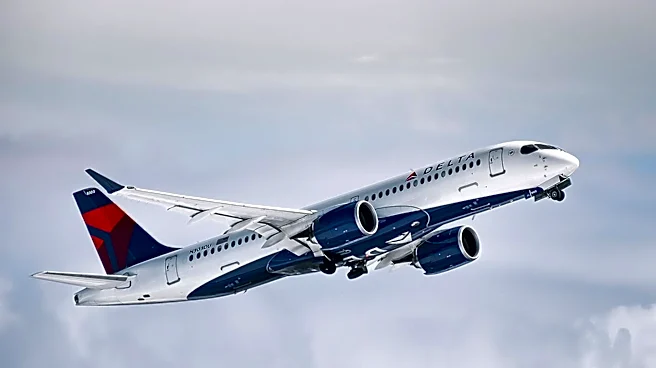
Tenicka B, a Black woman from New York City and a Delta Diamond member in Delta Air Lines' SkyMiles loyalty program, was upgraded to business class on a domestic flight. During the flight, she encountered a microaggression from a male passenger who, without
introducing himself, allegedly asked her about her profession. In response, Tenicka B engaged in what she described as a 'macroaggression,' implying that she was unaccustomed to commercial flights and only interacted with staff on private jets, even showcasing her Hermes 30 Birkin bag. The interaction, which she shared on TikTok, quickly went viral, sparking a broader conversation about how individuals respond to microaggressions, particularly in public settings like air travel.
Why It's Important?
This incident highlights the pervasive nature of microaggressions and their impact on individuals, particularly those from marginalized communities, even in seemingly privileged settings like business class travel. The viral response to Tenicka B's story indicates a widespread resonance with the experience of being subjected to subtle, often unintentional, expressions of prejudice or skepticism. It underscores the emotional labor involved in navigating such encounters and the creative ways individuals develop to assert their dignity and challenge assumptions. The incident also brings to light the role of social media platforms like TikTok in amplifying personal experiences and fostering collective discussions around social issues, influencing public perception and potentially shaping corporate responses to customer service and inclusivity.
What's Next?
The viral nature of Tenicka B's experience could prompt further discussions within Delta Air Lines and the broader airline industry regarding passenger interactions, staff training on diversity and inclusion, and the handling of microaggressions. While there is no indication of direct action from Delta Air Lines regarding this specific incident, the public discourse generated by such events often leads to increased awareness and internal reviews of customer experience policies. Social media will likely continue to be a platform for individuals to share similar experiences, potentially influencing how airlines and other service industries approach customer relations and address implicit biases among their clientele and staff. The incident may also encourage more individuals to adopt similar 'macroaggression' strategies as a form of resistance against microaggressions.
Beyond the Headlines
This event delves into deeper societal issues concerning class, race, and assumptions about who 'belongs' in certain spaces. The passenger's question, 'What do you do for work?' directed at a Black woman in business class, can be interpreted as an implicit challenge to her presence, suggesting that her status is unexpected or requires justification. Tenicka B's response, by invoking private jet travel and luxury items, effectively subverted the microaggression by highlighting the questioner's own assumptions and privilege. This exchange reflects a broader cultural tension where individuals from underrepresented groups often face scrutiny and skepticism about their achievements and rightful place in society. The incident serves as a powerful example of how personal encounters can expose and challenge systemic biases, prompting reflection on social norms and expectations.