



What's Happening?
Greg Maffei, the 66-year-old American businessman who served as CEO of Liberty Media until late 2024, believes the company will likely sell Formula 1 (F1) and potentially MotoGP within the next two years. Maffei was at the helm when Liberty Media acquired
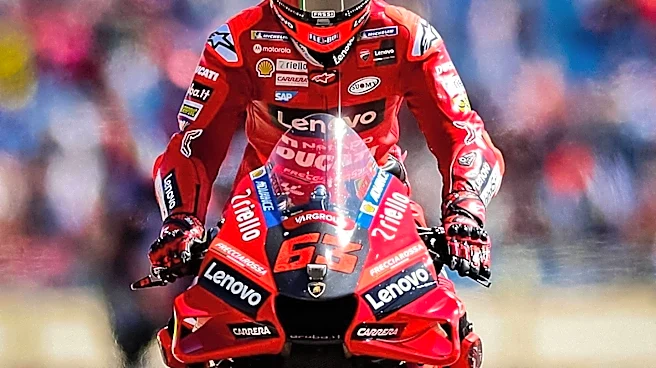
F1 rights in 2017 for approximately $4.6 billion. Since then, F1's stock value has surged by 250%, and its pre-tax profits have increased eightfold. Maffei views this as a logical business decision, not based on insider knowledge, but on the significant appreciation of F1's value. He estimates F1 could fetch between $28-30 billion in a sale. He suggests that Liberty Media is unlikely to find a better opportunity to sell F1 for such a substantial profit, as he considers it improbable for the asset's value to triple again in the coming years. This potential sale could also include MotoGP, which Liberty Media acquired in 2025.
Why It's Important?
The potential sale of Formula 1 and MotoGP by Liberty Media carries significant implications for the global sports and entertainment industries. A transaction of this magnitude, estimated to be in the range of $28-30 billion for F1 alone, would represent one of the largest sports media deals in history. For Liberty Media, it signifies a strategic move to capitalize on a highly successful investment, demonstrating a significant return for its shareholders. The sale could attract major investment firms, sovereign wealth funds, or other media conglomerates looking to expand their footprint in the lucrative motorsport sector. For F1 and MotoGP, a change in ownership could lead to new strategic directions, investment in infrastructure, broadcast rights negotiations, and fan engagement initiatives. This could impact the sport's accessibility, commercial partnerships, and overall global reach, potentially altering the competitive landscape for other major sports properties.
What's Next?
Should Liberty Media proceed with a sale, the immediate next steps would involve engaging financial advisors and exploring potential buyers. Given Maffei's projection of a sale within the next two years, this process could begin relatively soon. Potential buyers would likely include large private equity firms, global media conglomerates, or even consortiums of investors. The sale process would involve extensive due diligence, valuation assessments, and complex negotiations. For MotoGP, the recent acquisition by Liberty Media and subsequent operational changes, such as the compressed race weekend schedule and increased focus on communication aspects over smaller categories, could be interpreted as efforts to rapidly increase its value in preparation for a bundled sale with F1. The motorsport world will be closely watching for any official announcements or indications from Liberty Media regarding their intentions.
Beyond the Headlines
The potential divestment of Formula 1 and MotoGP by Liberty Media highlights a broader trend in the sports ownership landscape: the strategic acquisition, growth, and eventual sale of major sports properties for substantial profit. This approach, exemplified by Liberty Media's successful stewardship of F1, underscores the increasing financialization of sports as valuable assets. It also raises questions about the long-term vision for these sports under new ownership. While Liberty Media has been credited with expanding F1's global appeal, particularly in the U.S., a new owner might prioritize different growth strategies, potentially impacting the sport's traditional markets, fan base, and competitive integrity. The bundling of F1 and MotoGP in a potential sale also suggests a strategic move to create a comprehensive motorsport package, which could consolidate power and influence within the racing world, potentially affecting smaller racing series and their ability to compete for attention and sponsorship.