





What's Happening?
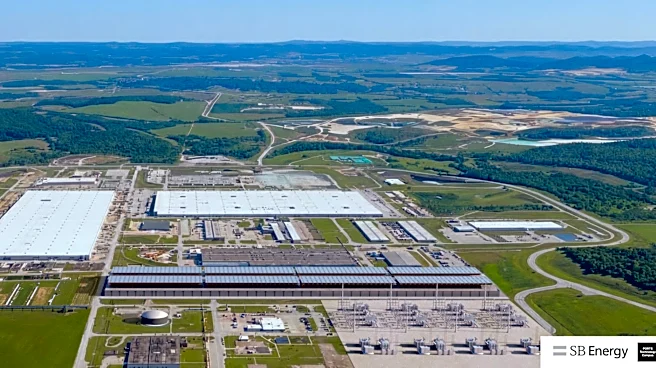
Oklo has announced a collaboration with Meta Platforms to develop a 1.2-gigawatt nuclear campus in Ohio. This campus is specifically designed to provide power for Meta's data centers. Concurrently, Oklo is progressing with its Aurora Powerhouse reactor,
aiming for operation in the late 2020s, pending Department of Energy safety approvals. This partnership with a hyperscale customer like Meta Platforms is a significant step for Oklo, reinforcing its strategy to position nuclear energy as a foundational component for AI and digital infrastructure. The agreement highlights Oklo's 'build own operate' model and its potential for securing long-term power contracts, which could help offset its current quarterly net loss of US$48.5 million. The success of this venture and its impact on Oklo's revenue will depend on the execution of the Aurora-INL project, the Ohio campus development, and the broader fuel and reactor programs.
Why It's Important?
This agreement is important as it signifies a growing trend of major technology companies investing in advanced nuclear energy solutions to meet the substantial power demands of AI data centers. The 1.2-gigawatt nuclear campus in Ohio represents a significant commitment to nuclear power as a reliable and potentially sustainable energy source for high-density computing environments. For Oklo, this partnership with Meta Platforms provides a strong validation of its advanced reactor technology and business model, potentially attracting further investment and partnerships in the nuclear energy sector. It also underscores the increasing recognition of nuclear power's role in supporting the energy-intensive infrastructure required for artificial intelligence. The project could set a precedent for how large-scale data centers are powered in the future, influencing energy policy and infrastructure development across the U.S. The move also highlights the challenges of balancing rapid technological advancement with sustainable energy solutions.
What's Next?
The immediate next steps for Oklo involve advancing the Aurora Powerhouse reactor towards late-2020s operation, which requires securing Department of Energy safety approvals. Concurrently, the development of the 1.2-gigawatt nuclear campus in Ohio for Meta Platforms will proceed. The execution of these projects will be crucial in demonstrating the viability of Oklo's advanced nuclear technology and its ability to deliver on long-term power contracts. Investors will be closely watching for progress on licensing, the initial operation of Aurora-INL, and the company's capital needs. Potential risks include construction, regulatory, and financing delays. The success of this partnership could influence other hyperscale customers to consider advanced nuclear solutions for their energy needs, potentially accelerating the adoption of such technologies in the U.S. energy landscape. Oklo's ability to translate this contract structure into actual revenue will be a key indicator of its future growth and profitability.
Beyond the Headlines
This collaboration between Oklo and Meta Platforms extends beyond a simple power supply agreement; it represents a strategic alignment between the burgeoning AI industry and the advanced nuclear energy sector. The immense energy requirements of AI data centers are pushing the boundaries of traditional power grids, making innovative and reliable energy sources like advanced nuclear reactors increasingly attractive. This partnership could catalyze a broader shift in how large-scale digital infrastructure is powered, potentially leading to a resurgence in nuclear energy development in the U.S. It also raises questions about the long-term environmental impact of AI, as companies seek cleaner and more efficient energy solutions. The open-sourcing of advancements in cooling technologies, as mentioned in related contexts, suggests a collaborative effort within the tech industry to address the sustainability challenges posed by AI. This could foster a new era of energy infrastructure development that prioritizes both technological advancement and environmental responsibility.