



What's Happening?
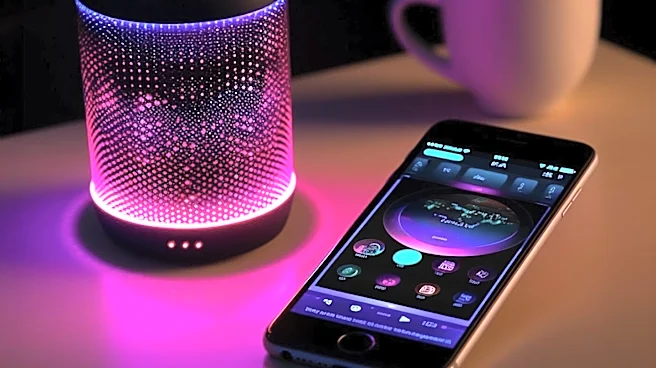
Homeowners can now synchronize outdoor Christmas lights with music using smart lighting systems, creating dynamic visual effects that react to audio. This technology utilizes compatible LED lights and music-responsive controllers that adjust lighting effects based
on audio signals. These systems can alter colors, brightness, and animations in real-time to match the music. While some systems offer simple music-reactive displays, more advanced setups allow for preprogrammed sequences, enabling precise choreography of lighting actions to specific parts of a song. The equipment required typically includes compatible lights, an appropriate controller, a power supply, and an audio input system. Companies like BlueHopper offer permanent outdoor lighting solutions with built-in music-sync functionality, allowing for year-round use beyond just holiday celebrations.
Why It's Important?
The integration of music synchronization into smart outdoor lighting systems is significant for the U.S. consumer market, particularly in the home entertainment and smart home sectors. This innovation enhances the aesthetic appeal and interactive experience of outdoor spaces, driving demand for advanced lighting products. It creates new opportunities for manufacturers and installers of smart home technology, as consumers seek to personalize their living environments with sophisticated, app-controlled features. The ability to use permanent lighting for various events throughout the year, not just holidays, increases the value proposition for homeowners and expands the market beyond seasonal purchases. This trend also highlights the growing consumer expectation for seamless integration and customizable experiences within their smart home ecosystems, pushing companies to innovate further in user-friendly and versatile solutions.
What's Next?
The future of music-synchronized smart lighting will likely see further advancements in artificial intelligence and machine learning, allowing for more nuanced and adaptive lighting responses to music without extensive manual programming. Expect to see greater integration with voice assistants and other smart home platforms, enabling effortless control and customization. Manufacturers will probably focus on developing more energy-efficient LED technologies and wireless communication protocols to simplify installation and enhance reliability. The market may also expand to include more modular and scalable systems, allowing homeowners to easily add or reconfigure lighting zones. As the technology becomes more accessible, there could be a rise in community-wide synchronized light shows, fostering a new form of neighborhood engagement and entertainment.
Beyond the Headlines
Beyond the immediate entertainment value, the evolution of music-synchronized smart lighting touches upon broader themes of personalization and experiential design in residential spaces. It transforms static outdoor lighting into an interactive art form, blurring the lines between technology, design, and personal expression. This trend reflects a cultural shift towards creating immersive environments at home, where technology serves to enhance sensory experiences. However, it also raises considerations regarding light pollution and neighborhood aesthetics, as highly dynamic displays could potentially impact surrounding areas. The ethical implications of energy consumption for purely aesthetic purposes might also come into play, although advancements in LED efficiency aim to mitigate this. Ultimately, these systems represent a step towards more dynamic, responsive, and emotionally engaging home environments.