







What's Happening?
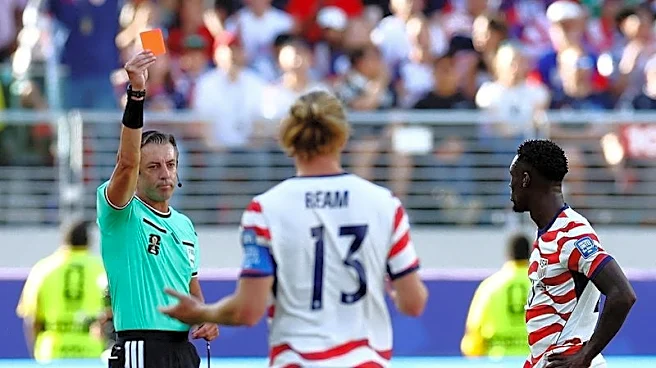
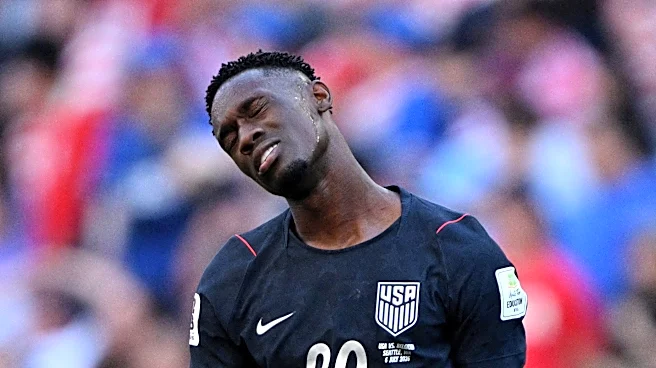
During the World Cup Round of 16 match between the U.S. and Belgium, the controversy surrounding Folarin Balogun's red-card suspension had a significant impact on the U.S. team. Balogun, who was initially suspended, saw his suspension controversially
overturned by FIFA's Disciplinary Committee, reportedly influenced by a single individual. This decision created a tense atmosphere within the U.S. team, as Balogun admitted that the 'outside noise' and the unique situation caused nerves among his teammates. Despite efforts to focus, the team struggled with the pressure, ultimately losing 4-1 to Belgium. The reversal of Balogun's suspension was unprecedented and shifted the focus from the game to the controversy, affecting the team's morale and performance.
Why It's Important?
The incident highlights the influence of administrative decisions on team dynamics and performance in international sports. The U.S. team's experience underscores the potential impact of external controversies on athletes' mental states and game outcomes. This situation also raises questions about the fairness and transparency of disciplinary processes in major sporting events. The U.S. team's loss and the surrounding controversy could affect their reputation and future performances, as well as prompt discussions on how such situations should be handled to ensure fair play and focus on the sport itself.
What's Next?
The U.S. team may need to address the psychological impact of the controversy and work on rebuilding team morale. FIFA might face scrutiny over its disciplinary processes, potentially leading to calls for more transparent and consistent decision-making. The incident could also influence how teams prepare for and handle similar situations in future tournaments, emphasizing the importance of mental resilience and focus amidst external pressures.