




What's Happening?
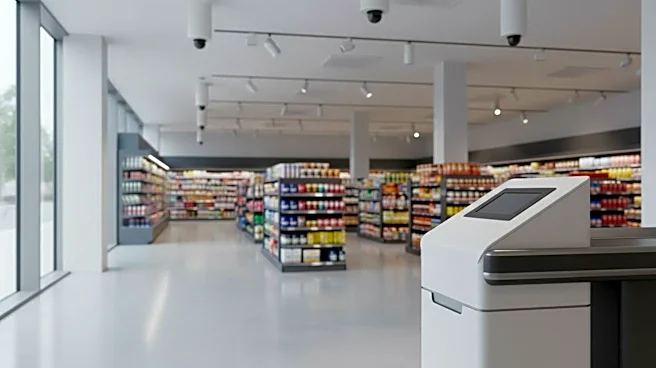
Retail environments are increasingly integrating cashierless payment systems, leveraging advanced technologies such as computer vision, sensor-based product tracking, and mobile payment applications. This shift aims to streamline checkout processes and improve
overall operational efficiency. According to Brink's US, automated cash management and retail automation technologies offer significant benefits, including enhanced security and reduced manual handling of cash. Key examples of these technologies include automated cash recyclers, contactless payment terminals, self-checkout systems, queue management systems, and mobile payment apps. Cashierless stores, which use sensors and cameras to automatically track items and charge customers upon exit, are also becoming more prevalent. These innovations are transforming how customers pay, reducing wait times, and minimizing human error, thereby improving the shopping experience and freeing staff for other tasks. The integration of these technologies also provides retailers with real-time insights into sales and inventory, enabling data-driven decisions.
Why It's Important?
The widespread adoption of cashierless payment technologies holds significant importance for the U.S. retail industry. It addresses critical challenges such as labor shortages, rising operational costs, and shrink concerns, as highlighted by Brink's US. By automating tasks, retailers can reduce manual errors, save time, and gain clearer visibility into their operations, which is crucial in an era of tightening margins and evolving consumer expectations. This technological shift allows businesses to improve efficiency, optimize staffing, and make smarter decisions regarding inventory and customer behavior. For consumers, these systems offer increased convenience, faster transactions, and reduced physical contact, enhancing the overall shopping experience. The ability to process payments quickly and seamlessly can also lead to increased sales opportunities, particularly in high-traffic or mobile retail settings. Ultimately, this trend is reshaping the retail landscape, pushing it towards a more resilient, scalable, and data-driven future.
What's Next?
The future of retail innovation will likely see continued integration of AI, robotics, and intelligent systems to further enhance cashierless operations and customer engagement. Industry reports, such as one by Nvidia, indicate that a significant majority of retailers find automation decreases annual costs and contributes to higher revenue. Agentic AI is expected to drive even greater efficiencies by automating routine tasks, optimizing inventory and supply chains, and personalizing customer interactions. Retailers will continue to explore hybrid models that combine self-service technology with scheduled or part-time staffing, allowing for flexibility based on customer traffic and operational needs. The focus will be on leveraging technology to improve access, simplify transactions, optimize space utilization, and enhance the customer experience, rather than solely on eliminating labor. This will involve careful consideration of total program costs versus total program value, including factors like incremental operating hours, potential sales, and customer support, to ensure a strong return on investment.
Beyond the Headlines
The move towards cashierless payments extends beyond mere transactional efficiency, touching upon deeper societal and ethical considerations. While these technologies promise convenience and cost savings, they also raise questions about data privacy and security, as vast amounts of customer behavior data are collected. The shift could also impact employment dynamics, as the role of cashiers evolves from direct transaction processing to supervising automated systems and providing customer assistance. Retailers must balance the benefits of automation with the need to maintain human interaction and support, especially for customers who may be less tech-savvy or require assistance. Furthermore, the accessibility of these technologies for all demographics, including those without smartphones or digital payment methods, will be a critical factor in ensuring equitable access to retail services. The long-term implications include a potential reshaping of urban retail spaces, with stores evolving into showrooms where physical presence is more about experience than immediate purchase, and inventory fulfillment is managed through diverse logistics channels.