




What's Happening?
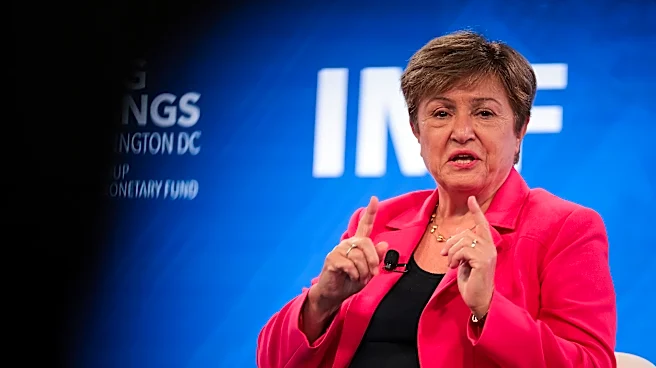
International Monetary Fund (IMF) Managing Director Kristalina Georgieva has indicated that global inflation has accelerated to 4.7%. This increase is primarily attributed to energy supply shocks and a surge in demand linked to Artificial Intelligence.
Georgieva made these remarks during her address at the Asia-Pacific Economic Cooperation summit, which took place in Shenzhen, a major tech hub in southern China. She emphasized the economic pressures currently impacting various markets worldwide. In response to these rising inflation figures, the IMF chief advocated for many economies to implement tighter monetary policies. This measure is proposed as a way to effectively manage and mitigate the upward price pressures that are currently being observed globally. The statements underscore the ongoing economic challenges confronting businesses and policymakers as they navigate significant macroeconomic shifts influenced by both technological demand and dynamics within the energy market.
Why It's Important?
The call for tighter monetary policy by the IMF Managing Director signals a potential shift in global economic conditions that could significantly impact U.S. industries and financial markets. Higher interest rates, a common tool in tighter monetary policies, could increase borrowing costs for U.S. businesses, potentially slowing investment and expansion. For consumers, this might translate into higher loan rates for mortgages, auto loans, and credit cards, affecting purchasing power and overall demand. Industries heavily reliant on energy, such as manufacturing and transportation, could face increased operational costs due to energy supply shocks. Furthermore, the rising demand for Artificial Intelligence, while a driver of innovation, could also contribute to inflationary pressures in the tech sector, influencing investment strategies and resource allocation within U.S. tech companies. Policymakers in the U.S. will need to consider these global trends when formulating domestic economic strategies to maintain stability and growth.
What's Next?
Following the IMF's recommendation, central banks in various economies, including potentially the U.S. Federal Reserve, may consider or continue to implement more restrictive monetary policies. This could involve further interest rate hikes or quantitative tightening measures. Businesses, particularly those in the U.S., will likely need to adjust their financial planning to account for a potentially higher cost of capital and reduced consumer spending. Entrepreneurs, as highlighted by Dr. Shishir Gupta, Founder & CEO of StartupLanes, will need to prioritize strict fiscal discipline, robust cash flow management, and the development of resilient business models to navigate a tightening financial environment. Policymakers will be closely monitoring inflation data and economic indicators to assess the effectiveness of current policies and determine future actions, aiming to balance inflation control with economic growth.
Beyond the Headlines
The underlying drivers of current inflation, specifically energy supply shocks and AI-driven demand, point to deeper structural shifts in the global economy. The reliance on energy markets, susceptible to geopolitical events and supply chain disruptions, highlights ongoing vulnerabilities. Simultaneously, the burgeoning demand for Artificial Intelligence signifies a technological revolution that, while promising immense productivity gains, also introduces new inflationary pressures through increased demand for specialized hardware, energy consumption for data centers, and skilled labor. This dual pressure suggests that traditional monetary policy tools might need to be complemented by broader strategies addressing supply-side constraints and the economic implications of rapid technological advancement. The long-term implications could include a re-evaluation of energy independence strategies and policies aimed at fostering sustainable AI development to mitigate its inflationary impact.