


What's Happening?
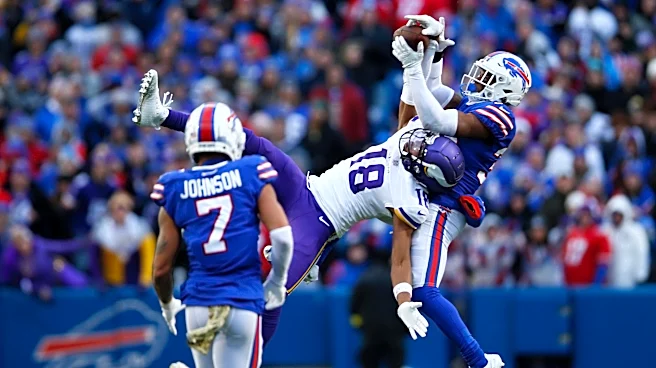
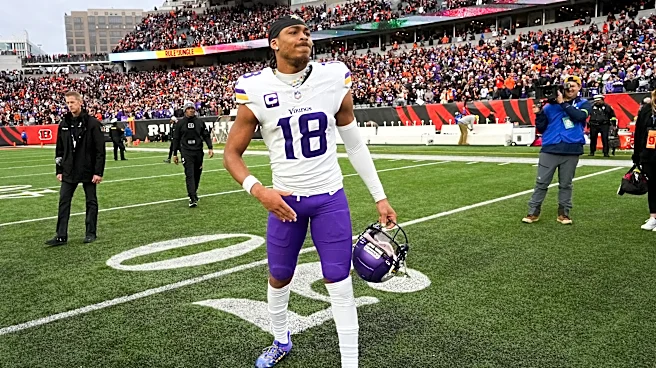
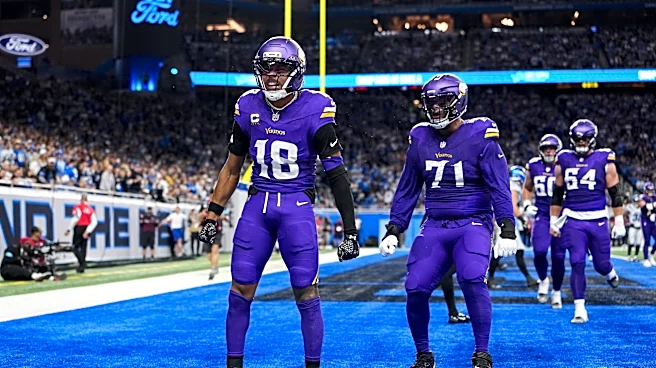
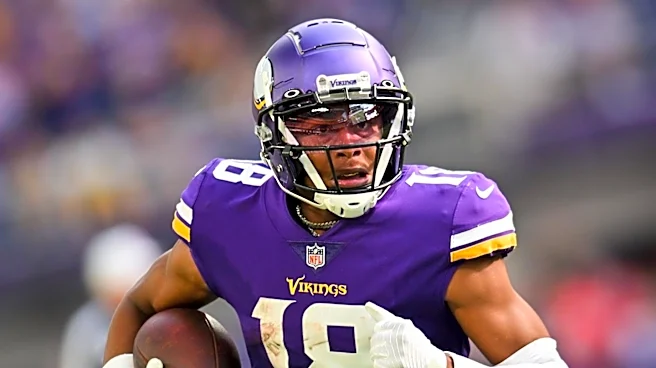
Minnesota Vikings wide receiver Justin Jefferson is experiencing a notable decline in his performance during the 2026 NFL season, following a career-low in 2025. His statistics for 2026 are worse across the board compared to the previous year. As of Week
9, Jefferson has accumulated only 335 receiving yards, a significant drop from his career-low of 1,048 receiving yards in 2025. His average yards per catch has decreased from 12.5 in 2025 to 12.0 in 2026. Furthermore, he has recorded only 17 receiving first downs this season, down from 47 last year. His average catches per game have fallen from 4.9 to 4.7, and his receiving yards per game have dropped from 61.6 to 55.8. This downturn in production raises questions about the factors contributing to his performance.
Why It's Important?
This significant drop in Justin Jefferson's performance is important for several reasons, primarily impacting the Minnesota Vikings and the broader NFL landscape. For the Vikings, Jefferson is a key offensive player, and his reduced output directly affects the team's offensive capabilities and overall competitiveness. The team's reliance on his playmaking ability means that his struggles could hinder their playoff aspirations and necessitate a re-evaluation of their offensive strategy. For fantasy football players and sports bettors, Jefferson's declining statistics represent a major shift in his expected value, requiring adjustments in their predictions and wagers. More broadly, it sparks a debate within the NFL community about whether the decline is due to Jefferson's individual performance or the quality of quarterback play he is receiving. This situation could influence future player contracts, trade discussions, and coaching decisions across the league, as teams assess the impact of star player performance fluctuations.
What's Next?
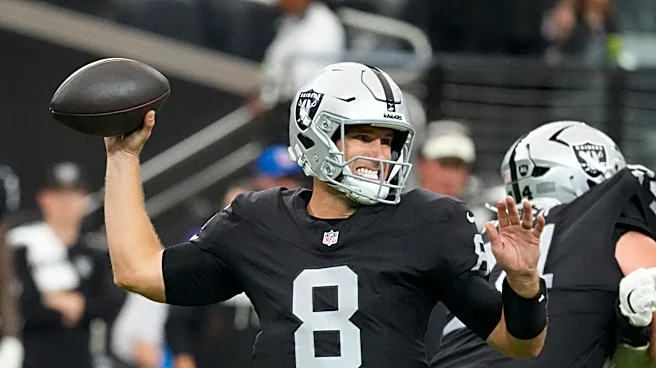
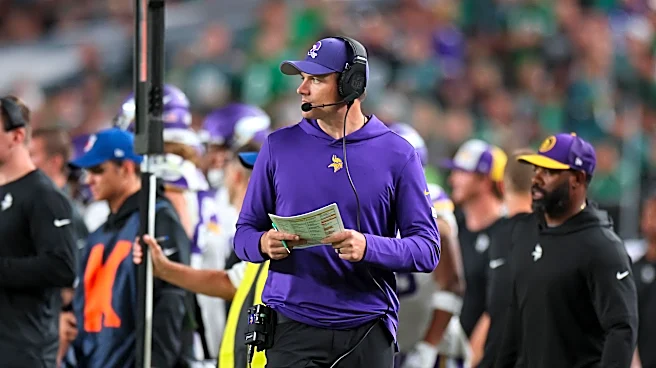
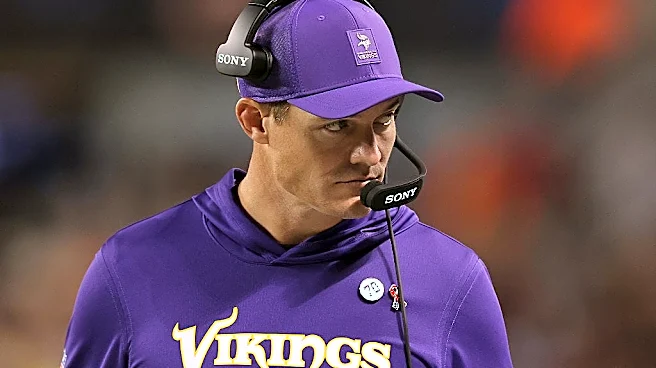
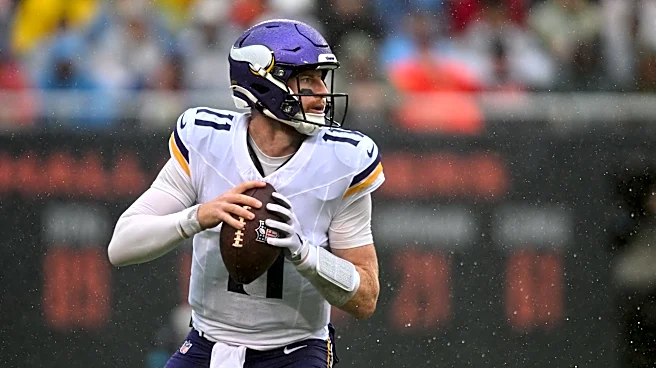
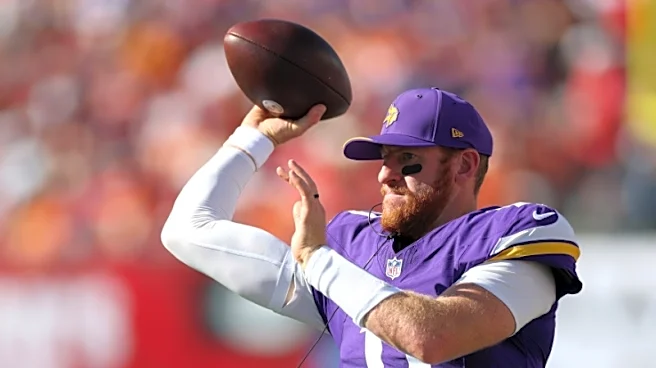
The immediate focus for the Minnesota Vikings will be on their upcoming Monday night game against the Bills, where Carson Wentz is scheduled to start at quarterback in place of an injured Kyler Murray. This game is crucial as it could provide insights into whether the decline in Justin Jefferson's production is linked to quarterback performance. If Wentz and Jefferson establish a strong connection and deliver a high-production game, it might prompt Vikings coach Kevin O’Connell to consider Wentz as the team's starting quarterback moving forward. Conversely, if Wentz fails to maximize Jefferson's playmaking abilities, the Vikings may explore options for a new quarterback before the trade deadline. The team's decisions regarding their quarterback situation will directly impact Jefferson's potential for a rebound in performance and the Vikings' offensive strategy for the remainder of the season.
Beyond the Headlines
The ongoing struggles of Justin Jefferson highlight a deeper issue within professional sports: the intricate relationship between a star player's individual talent and the performance of their supporting cast, particularly the quarterback. While Jefferson's raw talent is undeniable, his recent statistics suggest that even elite players can be significantly impacted by external factors such as quarterback consistency and offensive scheme. This situation could spark broader discussions about player valuation in the NFL, where individual statistics are often heavily weighted in contract negotiations and public perception. It also underscores the strategic challenges faced by coaching staffs in optimizing player performance, especially when key components of the team are underperforming or injured. The outcome of this season for Jefferson and the Vikings may influence how teams approach roster construction, quarterback development, and offensive play-calling in the future, emphasizing the need for a cohesive and high-performing unit to unlock a star player's full potential.