










What's Happening?
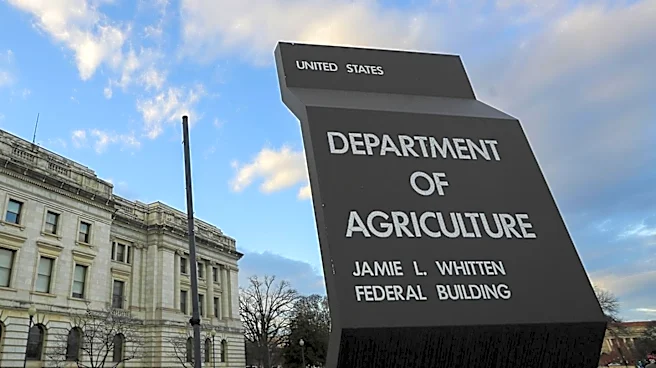
The United States Department of Agriculture (USDA) has announced a $125 million annual funding initiative aimed at modernizing agricultural research facilities across the nation. This funding, part of the Research Facilities Act program for fiscal year
2026, was unveiled by Agriculture Secretary Brooke Rollins. The initiative is designed to support renovation, expansion, and construction projects at eligible agricultural research institutions, including land-grant universities. The funds will be administered by the National Institute of Food and Agriculture and are intended to address deferred maintenance and outdated labs that hinder research in areas such as crop production, livestock health, food safety, and farm profitability. Applicants for the funding must provide a dollar-for-dollar non-federal cash match, with grants ranging from $100,000 for planning to $30 million for large research complexes.
Why It's Important?
This funding initiative is significant as it aims to enhance the infrastructure of agricultural research facilities, which are crucial for advancing research in food production and safety. By modernizing these facilities, the USDA seeks to accelerate the development of new technologies and practices that can improve farm profitability and sustainability. This investment is expected to benefit farmers, ranchers, and the broader agricultural sector by providing them with advanced tools and knowledge to address challenges such as pests, diseases, and climate change. The initiative also underscores the importance of maintaining competitive agricultural research capabilities to support the U.S. economy and food security.
What's Next?
Applications for the funding are due by July 17, and the USDA will likely begin reviewing submissions shortly thereafter. The focus will be on how quickly the new research capacity can translate into practical tools and solutions for producers. Stakeholders in the agricultural sector, including universities and research institutions, are expected to actively participate in this opportunity to secure funding for their projects. The outcomes of this initiative could lead to significant advancements in agricultural research and development, potentially influencing policy decisions and industry practices in the coming years.