






What's Happening?
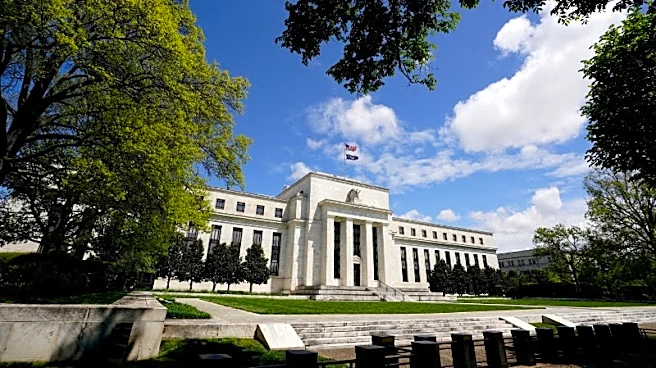
The University of Delaware's College of Agriculture & Natural Resources (CANR) recently provided feedback to the Federal Reserve Bank regarding the future financing of agriculture. This engagement is part of a broader effort by the Federal Reserve to conduct
'listening tours' and gather insights from various sectors to inform policymakers on fiscal policy. The Kansas City branch of the Federal Reserve, known for its agriculture-centric focus, facilitated this discussion. Key concerns raised by Delaware's agricultural community included the drying up of credit, banks prioritizing cash flow over farm equity for lending, high interest rates, and the increasing costs of utilities and fertilizers. Farmers also expressed frustration over labor availability and costs, the shrinking availability of farmland, and the stalled U.S. Farm Bill in Congress.
Why It's Important?
The feedback from Delaware's agricultural sector to the Federal Reserve is crucial for shaping national fiscal policies that directly impact the farming community. The challenges highlighted, such as credit access, high interest rates, and rising input costs, threaten the sustainability and growth of agricultural businesses. The lack of a U.S. Farm Bill further exacerbates uncertainty for farmers, affecting their ability to plan and invest. By providing direct input, the University of Delaware and local farmers ensure that policymakers receive a ground-level perspective on the economic realities faced by the agricultural industry, which is vital for food security and rural economies. This dialogue helps the Federal Reserve provide more accurate and inclusive data to inform policy decisions.
What's Next?
The Federal Reserve Bank will incorporate the feedback received from the University of Delaware and other agricultural stakeholders into its economic analyses and recommendations for policymakers. This information will contribute to a more comprehensive understanding of the financial landscape of the agricultural sector, potentially influencing future monetary and fiscal policies. The ongoing discussions about the U.S. Farm Bill in Congress will also be critical, as its passage could address some of the regulatory and financial uncertainties faced by farmers. Continued engagement between agricultural communities and financial institutions will be necessary to monitor and adapt to evolving economic conditions.
Beyond the Headlines
The interaction between local agricultural communities and the Federal Reserve highlights the intricate connection between grassroots economic realities and national policy-making. The concerns raised by Delaware farmers, particularly regarding land availability and the cost of inputs, reflect broader systemic issues affecting agriculture across the U.S. The shift in lending practices, prioritizing cash flow over farm equity, indicates a changing risk assessment by financial institutions, which could disproportionately affect smaller or less established farms. This dialogue underscores the need for policies that not only support large-scale agricultural operations but also ensure the viability of diverse farming models, contributing to a resilient and equitable food system.