




What's Happening?
Lewis Hamilton, a prominent Formula 1 driver, has publicly stated that Ferrari's power unit is approximately a year behind its competitors. This assessment follows a challenging qualifying session for Ferrari at the Qatar Grand Prix, where Hamilton himself
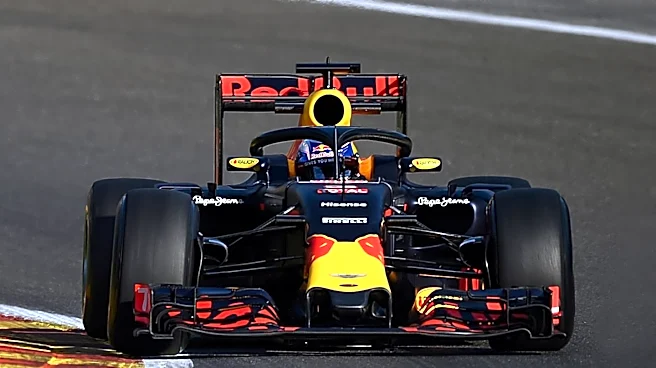
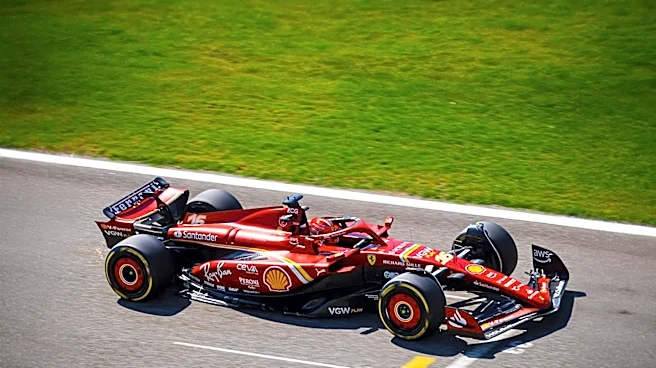
finished ninth. The core issue identified is the Ferrari SF-26's lack of straight-line power, a problem attributed to an engine design that initially focused on a small turbo to minimize lag and improve spool-up time. While Ferrari introduced an ADUO upgrade to enhance power, this advantage was reportedly negated by the implementation of a five-second pre-start procedure at Grands Prix. Despite the Scuderia's efforts, their chassis strengths have also been surpassed by rivals, including Red Bull's RB22, leading to Ferrari's projected second-place finish in the constructors' standings without being the second-fastest car by the end of the season.
Why It's Important?
This statement from a highly respected figure like Lewis Hamilton carries significant weight within the Formula 1 community and for Ferrari as a global brand. For Ferrari, a year-long deficit in power unit development can severely impact their competitiveness in upcoming seasons, potentially affecting their standing in the Constructors' and Drivers' Championships. This situation highlights the intense technological arms race in Formula 1, where even minor advancements or setbacks can have profound implications for team performance and financial investment. The struggle to catch up, as Hamilton noted, is a persistent challenge for engine manufacturers, indicating that significant resources and strategic shifts will be required for Ferrari to close the gap. This competitive disadvantage could also influence sponsorship deals, fan engagement, and the overall perception of Ferrari's engineering prowess in the high-stakes world of motorsport.
What's Next?
Ferrari's immediate focus will likely be on addressing the power unit deficit and improving their overall car performance for the upcoming Formula 1 season. The team's engineers and strategists will need to intensify their development efforts, potentially exploring new engine designs or significant upgrades to their existing power unit. Hamilton's comments suggest that catching up will be a formidable task, as engine manufacturers like Honda have also struggled to make substantial gains once behind. The competitive landscape of Formula 1 means that rivals will continue to innovate, making Ferrari's recovery a continuous uphill battle. The team's performance in early races of the next season will be closely watched to see if they have made any significant progress in closing the gap to their competitors.
Beyond the Headlines
The challenges faced by Ferrari in Formula 1 extend beyond mere race results; they touch upon the brand's legacy and identity. Ferrari is synonymous with high performance and engineering excellence, and sustained underperformance in its flagship racing series can subtly erode this image. The continuous struggle to match rivals in power unit development raises questions about the long-term strategic direction of Ferrari's motorsport division and its ability to adapt to evolving technical regulations. This situation could also influence the broader automotive industry, as innovations in Formula 1 often trickle down into road car technology. The pressure on Ferrari to regain its competitive edge is immense, not just for sporting glory but also for maintaining its prestige and market position as a leader in high-performance vehicles.