







What's Happening?
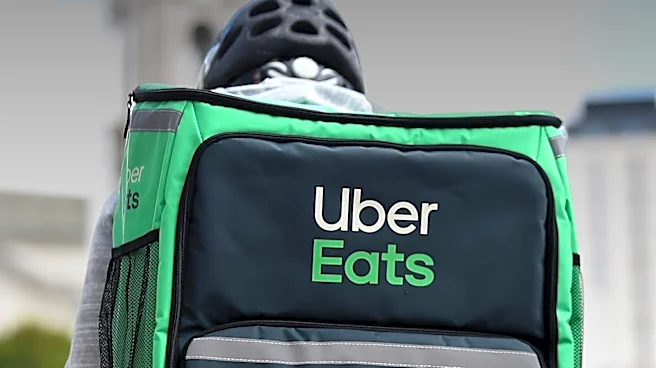
Jollof Bowl, a restaurant located in Baltimore, Maryland, claims that Uber Eats owes them nearly $30,000 in outstanding payments dating back to July of this year. According to owners Andrea Kamara and Lekan Oketunji, the issue began when they noticed
discrepancies in their daily payouts from the platform. Despite continuously fulfilling Uber Eats orders, the restaurant has not received the expected funds, leading to a significant financial strain. The owners state that delivery apps constitute approximately one-third of their total sales, making the unpaid amount a substantial loss. Uber Eats reportedly informed Jollof Bowl in September that payments were paused due to 'unusual activity' on the account, and while the restaurant can still accept orders, they have lost access to certain backend features of the platform.
Why It's Important?
This situation highlights a critical vulnerability for small businesses that rely heavily on third-party delivery platforms like Uber Eats. The alleged withholding of nearly $30,000 can severely impact a small restaurant's cash flow, operational stability, and ability to pay suppliers and staff. It underscores the power imbalance between large technology platforms and independent businesses, where a lack of transparency or slow resolution processes can have devastating consequences. The incident also raises questions about the reliability of payment systems within the gig economy and the need for clearer communication and more efficient dispute resolution mechanisms for merchants. For other small business owners, this serves as a cautionary tale to diligently monitor financial transactions with third-party platforms and diversify revenue streams.
What's Next?
Jollof Bowl continues to fulfill Uber Eats orders while simultaneously encouraging customers to place orders directly through their website or visit the restaurant in person. Uber has acknowledged the concerns raised by Jollof Bowl, stating that they are reviewing the issue and reaching out to the restaurant to provide support and work towards a resolution. The owners hope their experience will prompt other small businesses to meticulously review their payment data from delivery platforms. The outcome of this dispute could influence how other restaurants manage their relationships with third-party delivery services and potentially lead to calls for greater accountability and improved support systems from these platforms for their merchant partners.
Beyond the Headlines
The dispute between Jollof Bowl and Uber Eats touches upon broader themes of digital commerce, platform economics, and the challenges faced by small businesses in an increasingly digitized marketplace. The 'unusual activity' claim by Uber Eats, without immediate resolution or clear explanation, points to potential systemic issues in fraud detection or account management that can inadvertently penalize legitimate businesses. This incident also brings to light the ethical responsibilities of large tech companies towards their smaller partners, especially when these partners become heavily dependent on their platforms for revenue. The reliance on third-party apps, while offering reach and convenience, also introduces risks related to payment processing, data access, and customer relationship management, prompting a reevaluation of the balance between platform benefits and potential vulnerabilities for small enterprises.