





What's Happening?
Fluor Corporation has been chosen by X-Energy to provide engineering, design, and project management services for the Cascade Advanced Energy Facility, an advanced small modular reactor (SMR) project located near Richland, Washington. The contract value
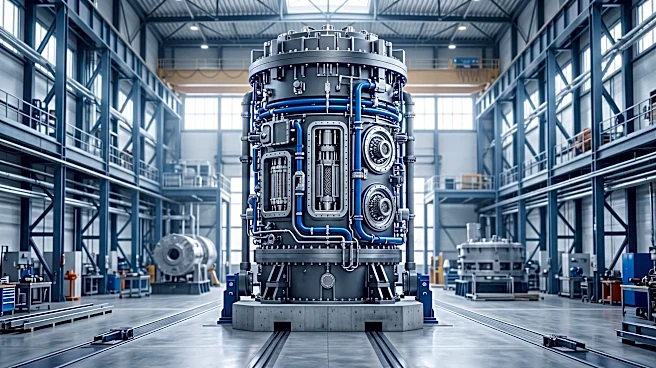
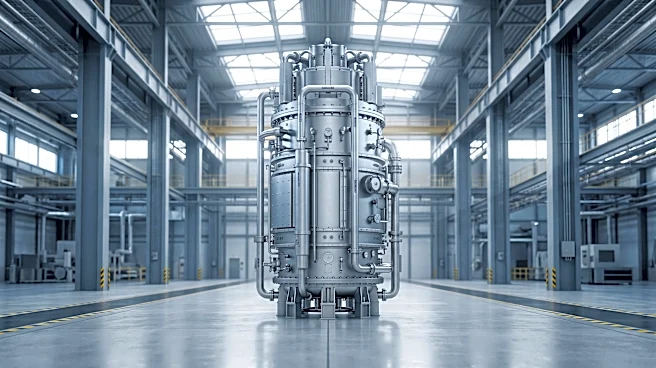
was not disclosed but will be recognized by Fluor in the third quarter. Fluor's responsibilities include engineering, design development, supply chain management, cost estimating, and project controls for the facility's nuclear island. The project will utilize X-Energy's Xe-100 high-temperature gas-cooled reactor technology. This selection leverages Fluor's existing collaboration with X-Energy, aiming to advance project development, optimize execution planning, and support investment decisions. The facility is designed to initially house four Xe-100 reactors, providing a combined generating capacity of approximately 320 megawatts (MW) of carbon-free electricity. There are plans for potential expansion to 12 units, which could increase the total capacity to 960 MW. This project marks the initial phase of X-Energy's broader goal to deploy 5 gigawatts of new nuclear capacity by 2039.
Why It's Important?
This project is significant for the U.S. energy landscape as it represents a tangible step forward in the deployment of next-generation nuclear energy technologies. The use of advanced SMRs like the Xe-100 is crucial for meeting growing energy demands while simultaneously pursuing decarbonization goals. SMRs offer several advantages, including smaller footprints, modular construction, and enhanced safety features, which could make nuclear power more accessible and economically viable. For the state of Washington, this facility could provide a stable source of carbon-free electricity, contributing to regional energy independence and environmental objectives. The potential for expansion to 960 MW indicates a long-term commitment to nuclear power as a key component of the energy mix. This development also highlights the role of established engineering firms like Fluor in bringing innovative nuclear projects to fruition, signaling confidence in the commercial viability and scalability of advanced nuclear technologies.
What's Next?
Following Fluor's selection, the project will proceed with detailed engineering and design development phases. Fluor will continue to work closely with X-Energy to optimize execution planning and secure necessary investment decisions. The construction timeline for the Cascade Advanced Energy Facility will be a critical next step, with regulatory approvals and licensing processes playing a significant role. As the project progresses, it will serve as a benchmark for future SMR deployments in the United States, potentially influencing policy and investment in advanced nuclear technologies. X-Energy's broader ambition to deploy 5 gigawatts of new nuclear capacity by 2039 suggests that successful execution of this initial project in Washington will likely pave the way for similar developments across the country, attracting further private and public sector interest in the advanced nuclear sector.
Beyond the Headlines
The Cascade Advanced Energy Facility's development has broader implications for the U.S. energy strategy, particularly in the context of climate change and energy security. By deploying high-temperature gas-cooled reactors, the project could also explore applications beyond electricity generation, such as industrial heat production or hydrogen generation, further diversifying the utility of nuclear energy. This project could also stimulate economic growth in the Richland area through job creation in construction, engineering, and operations. Furthermore, the success of this SMR project could influence international perceptions and adoption of advanced nuclear technologies, positioning the U.S. as a leader in nuclear innovation. Addressing public perception and ensuring robust safety protocols will be crucial for the long-term success and acceptance of such advanced nuclear facilities.