



What's Happening?
Airbus, a European aerospace leader, is implementing virtual twin technology from Dassault Systèmes to revolutionize its supply chain management and product development processes. According to Airbus CEO Guillaume Faury, the company faces significant
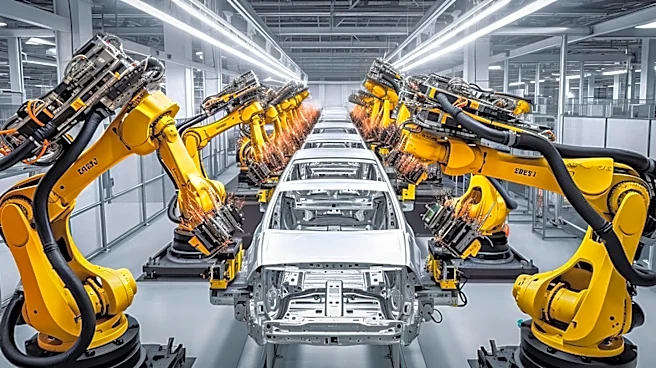
competitive pressures, including rapid growth, a substantial backlog for commercial aircraft, and the need to prepare for next-generation products. The increasing complexity and size of their products, coupled with the intricate production systems and long operational lifecycles, necessitate a sophisticated approach. Airbus is integrating human intelligence with artificial intelligence to manage this complexity, aiming to orchestrate design, manufacturing, and servicing across multiple countries and with external partners. The core of this strategy involves creating digital twins of products and production systems, allowing for extensive testing, comparison, and evaluation of numerous configurations before physical production. This digital-first approach is intended to accelerate the delivery of more sophisticated and reliable products.
Why It's Important?
This strategic shift by Airbus highlights a growing trend in complex industries towards integrating advanced digital technologies like virtual twins and AI. For the U.S. aerospace and manufacturing sectors, this demonstrates a benchmark for innovation in managing intricate supply chains and product lifecycles. The adoption of such technologies can lead to significant improvements in efficiency, reliability, and time-to-market, potentially setting new industry standards. Companies that fail to embrace similar digital transformation may find themselves at a competitive disadvantage. Furthermore, the emphasis on combining human and artificial intelligence underscores the evolving nature of work, where AI augments human capabilities rather than replacing them entirely, impacting workforce development and training needs in high-tech industries. The move also signals a deeper integration of software and hardware in product development, demanding robust cybersecurity and data sovereignty measures.
What's Next?
Airbus plans to expand its use of Dassault Systèmes' 3DEXPERIENCE platform across all its activities, including commercial developments, production systems for helicopters, defense, and space. This phased implementation will involve maturing both Airbus's ability to work with the platform and the platform itself, addressing constraints such as traceability, reliability, cybersecurity, and sovereignty. Future products entering the market in the next decade are expected to be 'born native' on 3DEXPERIENCE, meaning they will be designed, maintained, and further developed within this digital environment. The company also aims to extend this collaborative digital ecosystem to its main partners and suppliers to maximize the benefits of this approach, fostering greater speed, reliability, and control throughout the entire value chain. This expansion will require significant collaboration and integration efforts across the aerospace ecosystem.
Beyond the Headlines
The adoption of virtual twin technology and AI by Airbus signifies a fundamental shift in industrial paradigms, moving towards a 'single source of truth' for data that transcends company borders and integrates the entire product lifecycle from design to operation. This approach has profound implications for intellectual property management, data sharing protocols, and collaborative innovation within global supply chains. Ethically, it raises questions about data ownership and the responsibilities associated with managing vast amounts of digital information. Legally, it may necessitate new frameworks for digital product certification and liability in an environment where physical and digital realities are increasingly intertwined. Culturally, it fosters a more data-driven and collaborative engineering mindset, potentially reshaping traditional organizational structures and skill sets required in the aerospace industry and beyond.