






What's Happening?
Cummins Inc., a global power technology leader, has identified three major trends that are reshaping the future of the mining industry: decarbonization, greater connectivity, and increased automation. The mining sector is currently experiencing significant
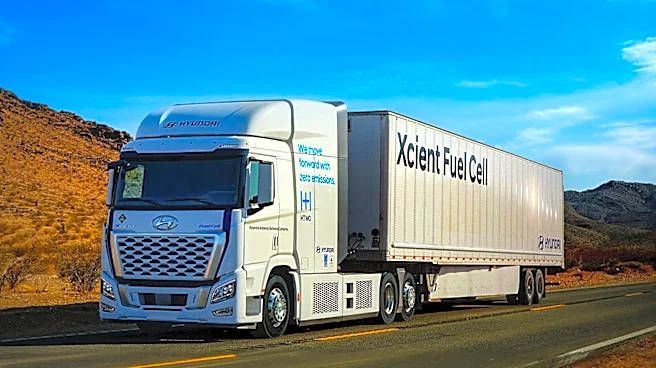
change due to growing demand for critical minerals like copper, lithium, and nickel, driven by global infrastructure, manufacturing, and energy transition needs. Simultaneously, mining companies face pressure to reduce emissions, enhance safety, and boost productivity in increasingly complex operating environments. Decarbonization efforts are leading to diverse power pathways, including hybrid-electric systems, battery-electric equipment, hydrogen-based technologies, and on-site renewable energy. Automation and digitalization are fostering more connected operations, with autonomous trucks, drills, and loaders becoming common, alongside remote operating centers. Digitalization is further accelerating this by improving connections between equipment, personnel, and processes through IoT sensors, telematics, and predictive analytics, which provide insights into equipment health and performance.
Why It's Important?
These trends are crucial for the U.S. mining industry as they directly impact operational efficiency, environmental sustainability, and worker safety. The push for decarbonization aligns with broader national and global climate goals, potentially reducing the carbon footprint of a historically energy-intensive industry. Adopting hybrid and electric technologies can decrease reliance on fossil fuels, leading to lower operating costs and compliance with stricter environmental regulations. Increased connectivity and automation are vital for improving productivity and safety, especially as mining operations move into more demanding and remote locations. Autonomous equipment can reduce human exposure to hazardous environments, while data-driven decision-making, enabled by digitalization, allows for proactive maintenance and optimized resource allocation. This evolution is essential for the U.S. to maintain a competitive edge in critical mineral extraction, which is fundamental for domestic manufacturing, infrastructure development, and the transition to a green economy. The ability to adapt to these technological shifts will determine the long-term viability and success of mining companies in the U.S.
What's Next?
The mining industry is expected to continue its rapid evolution, with companies needing to strategically combine various technologies to meet their specific operational needs. The direction of travel is clear: a focus on improving safety, reducing environmental impact, and maintaining productivity. This will involve ongoing investment in research and development for advanced power solutions and digital infrastructure. The adoption of these technologies will not be uniform across all operations, as factors like geography, existing infrastructure, energy availability, and business priorities will influence individual choices. Trusted partners, such as Cummins, will play an increasingly important role in helping miners navigate emerging technologies and integrate these capabilities effectively. Future developments will likely include further advancements in AI and machine learning to optimize operations, as well as continued efforts to develop robust charging and energy infrastructure to support the growing fleet of electric and hydrogen-powered mining equipment. The industry will also need to address the challenges of upskilling its workforce to manage and maintain these advanced systems.
Beyond the Headlines
The transformation of the mining industry through decarbonization, connectivity, and automation has profound implications beyond operational improvements. Ethically, the emphasis on safety and reduced environmental impact addresses long-standing concerns about the human and ecological costs of mining. The shift towards cleaner energy sources and more efficient processes can help mitigate the industry's historical contribution to climate change and local pollution. Socially, the increased automation could lead to changes in the mining workforce, requiring new skill sets and potentially impacting employment patterns in traditional mining communities. However, it also offers opportunities for safer, higher-skilled jobs in technology and data management. Culturally, the industry's embrace of advanced technology could reshape its public perception, moving from an image of a dirty, dangerous industry to one that is innovative and environmentally conscious. This evolution is critical for securing public acceptance and attracting future talent, ensuring the sustainable supply of essential minerals for the U.S. economy.