





What's Happening?
The European healthcare sector has demonstrated robust financial performance, with companies delivering 13% earnings growth in Q3 2026, significantly surpassing analyst forecasts of 2.4%. This marks the eleventh consecutive quarter of outperformance for the sector.
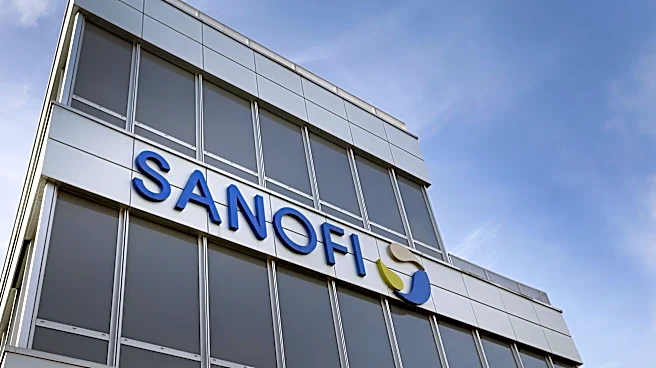
Over 71% of firms within the MSCI Europe Health Care Index exceeded earnings estimates. Pharmaceutical companies saw an 8.4% revenue growth, while healthcare equipment and services companies reported an 11% earnings increase. This strong showing is attributed to factors such as expanding oncology businesses, high demand for biosimilar medicines, and the beneficial impact of a stronger U.S. dollar on companies with significant American revenue. For instance, France's Sanofi, which generates approximately half its revenue in the U.S., raised its guidance twice due to surging demand for its skin and asthma treatment, Dupixent. AstraZeneca also contributed to these results through its oncology division.
Why It's Important?
This sustained outperformance of the European healthcare sector holds significant implications for U.S. investors and the broader financial landscape. As investors shift away from the volatility associated with artificial intelligence stocks, the healthcare sector is emerging as a stable and defensive investment haven. According to Barclays equity strategist Magesh Kumar, healthcare companies offer shelter from market uncertainty due to their minimal exposure to the dramatic swings of the AI cycle. UBS equity strategist Sutanya Chedda notes that capital is flowing back into healthcare after initial shifts towards AI, as questions arose about the sustainability of AI investments. This trend suggests a re-evaluation of investment strategies, prioritizing consistent performance and defensive growth, which is crucial during periods of elevated market volatility. The strong performance of companies like Sanofi, with substantial U.S. revenue, highlights the interconnectedness of global healthcare markets and the direct impact on U.S. financial interests.
What's Next?
The European healthcare sector is projected to continue its strong trajectory, with expected earnings per share growth of 5.5% over the next twelve months, accelerating to 14% the following year. This momentum is anticipated to be sustained through mid-2027, driven by ongoing pipeline developments. Novartis is looking forward to substantial annual revenue from its experimental multiple sclerosis pill, remibrutinib. Swiss drugmaker Roche is advancing multiple sclerosis and oncology treatments, including a breast cancer pill expected to eventually surpass its former blockbuster, Herceptin. Sanofi's recent $41 billion acquisition of U.S. biotech Insmed, the largest pharmaceutical deal in three years, aims to expand its immunology and rare disease portfolio ahead of Dupixent's patent expiration. Additionally, pharmaceutical companies are exploring new revenue streams through consumer spending on weight-loss drugs, wellness products, and aesthetic treatments, exemplified by Novo Nordisk's increased guidance for 2026 due to the success of its weight-loss drug, Wegovy.
Beyond the Headlines
The robust performance of the European healthcare sector also sheds light on the limited impact of regulatory concerns that loomed at the start of 2026. Despite initial fears regarding aggressive drug pricing policies under the Trump administration, these concerns ultimately had a minimal effect on earnings. Bloomberg Intelligence analyst John Murphy explains that numerous deals signed between pharmaceutical companies and the White House effectively defused the threat of a regulatory crackdown that could have damaged profit margins. This indicates a complex interplay between political rhetoric and actual policy implementation, where direct engagement and agreements can mitigate perceived risks. The sector's ability to tap into consumer spending through weight-loss drugs and aesthetic treatments also signifies a broader shift in healthcare, moving beyond traditional government-funded models to embrace direct-to-consumer markets, creating multiyear revenue opportunities outside conventional healthcare frameworks.