







What's Happening?
The gold-silver ratio is currently expanding, standing at approximately 77-1, which suggests that silver is underperforming compared to gold. Historically, this ratio averages between 40-1 and 60-1 in the modern era, and an expansion often precedes a snap
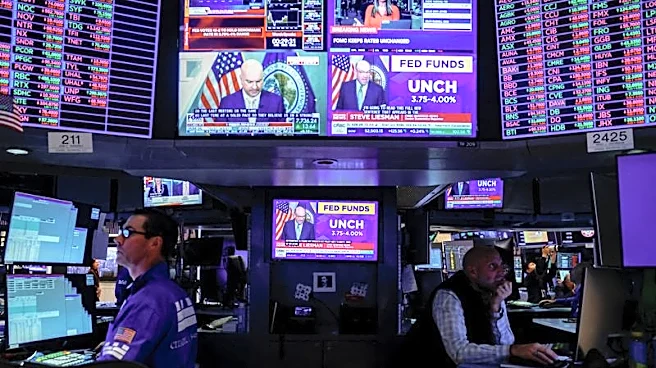
back to the mean, potentially indicating a future silver bull run. Both precious metals are facing significant headwinds due to rising yields and expectations of additional Federal Reserve rate hikes, as they are non-yielding assets. However, the gold market is receiving support from central bank gold purchases and Asian investors, particularly in China. In contrast, silver, viewed more as an industrial commodity, does not benefit from the same quasi-monetary attributes as gold. The physical tightness in the silver market, which previously drove prices higher, has eased, with London vault inventories reaching a four-year high of 932 million ounces by the end of September, according to Metals Focus. Investor interest in silver has also waned, with significant outflows from silver ETPs and a sharp decline in primary silver bullion coin sales in Q2, though sales modestly recovered in Q3.
Why It's Important?
The expanding gold-silver ratio and the differing performance of the two metals have significant implications for investors and the broader market. Silver's underperformance, despite its historical tendency to rebound, highlights its vulnerability to economic factors like interest rate hikes and industrial demand fluctuations. The support for gold from central banks and Asian investors underscores its role as a safe-haven asset, contrasting with silver's more industrial-commodity perception. The easing of physical tightness in the silver market, as evidenced by increased inventories, suggests a reduction in speculative pressure and a return to more fundamental supply-demand dynamics. This shift could impact mining operations, industrial users, and investment strategies, as a sustained period of lower silver prices might deter new production or encourage greater industrial consumption. The current environment also reflects a broader investor sentiment, where a lack of conviction in silver's near-term price outlook is leading to reduced investment, potentially prolonging its underperformance relative to gold.
What's Next?
In the near term, Metals Focus analysts anticipate that physical silver demand will remain subdued. This is attributed to lower investment demand, the impact of higher silver prices on jewelry sales, and increased thrifting and substitution in industrial applications. While silver has been in a structural market deficit for the past five years, with demand outstripping supply, Metals Focus expects this deficit to ease further this year and potentially flip to a surplus in 2027. This shift would reduce the likelihood of another market squeeze. Analysts predict that silver will continue to take cues from gold over the next 12 months, with its higher beta suggesting further underperformance relative to gold as long as interest rates and yields remain high. However, Metals Focus maintains a more bullish long-term outlook, expecting silver to outperform once markets scale back expectations of aggressive monetary tightening in 2027, encouraging investors to rebuild their exposure. Technical analysis also suggests a potential triangle pattern in the gold-silver ratio, which, upon breaking down, could signal the next phase of a bull market for silver, potentially pushing its price beyond its record high of $121.
Beyond the Headlines
The current dynamics in the gold and silver markets reveal deeper implications beyond immediate price movements. The divergence in performance between gold and silver highlights the differing roles these precious metals play in the global economy and investor portfolios. Gold's resilience, bolstered by central bank buying and its status as a monetary asset, underscores its enduring appeal as a hedge against economic uncertainty and inflation. Conversely, silver's struggle, influenced by its industrial applications and investor sentiment, reflects its sensitivity to economic growth cycles and speculative interest. The easing of physical market tightness in silver, coupled with reduced investor interest, could lead to a re-evaluation of its investment thesis, potentially shifting focus from short-term speculative gains to its long-term industrial demand. This situation also brings into focus the impact of monetary policy, particularly Federal Reserve rate hikes, on non-yielding assets, influencing capital allocation decisions across various asset classes. The long-term bullish outlook for silver, despite current headwinds, suggests a potential for significant future gains once macroeconomic conditions become more favorable, emphasizing the cyclical nature of commodity markets and the importance of long-term investment horizons.