



What's Happening?
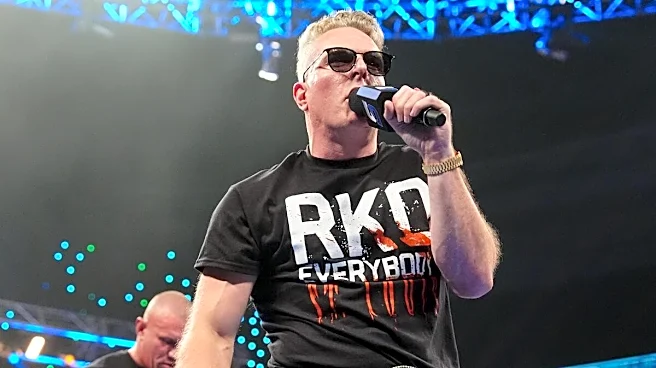
Former ESPN anchor Linda Cohn has voiced strong criticism regarding ESPN's extensive integration of Pat McAfee across its programming, suggesting it leads to 'McAfee fatigue' among viewers. Cohn, who retired from ESPN in June, highlighted McAfee's expanded
role, which includes his daily three-hour 'The Pat McAfee Show,' appearances on 'Monday Night Countdown,' and potential alternative broadcasts for 'Monday Night Football.' She noted that this could result in 'wall-to-wall McAfee' on Mondays during the NFL season. Cohn also referenced an incident where a tribute to late ESPN founder Bill Rasmussen on 'First Take' was cut short for McAfee's show, which she cited as an example of ESPN's overemphasis on McAfee. Her comments reflect a concern that ESPN is overexposing certain personalities, a practice she claims the network has engaged in for decades despite potential viewer dissatisfaction.
Why It's Important?
This situation is important as it highlights a significant shift in ESPN's programming strategy and its potential impact on viewer engagement and brand perception. By heavily featuring a single personality like Pat McAfee across multiple high-profile shows, ESPN is attempting to leverage his popularity to attract and retain audiences, particularly younger demographics. However, Cohn's critique suggests a risk of alienating a segment of its traditional viewership who may prefer a more diverse range of voices or find the constant presence of one individual overwhelming. This strategy could either solidify McAfee as a central figure in sports media or lead to viewer burnout, affecting ratings and subscriber numbers. The network's decision to prioritize McAfee's content, even at the expense of other programming, indicates a calculated risk in its competitive landscape.
What's Next?
ESPN will likely continue with its current strategy of integrating Pat McAfee across its various platforms, given the significant investment and strategic importance placed on his content. The network will monitor audience reception and ratings to determine the long-term viability of this approach. Viewers will continue to see McAfee in his expanded roles, including his daily show, 'Monday Night Countdown,' and potentially the 'Monday Night Football' alternative broadcasts, pending NFL approval. The ongoing debate about 'McAfee fatigue' may intensify, prompting further discussion among sports media critics and fans. ESPN's response to such criticisms, whether by adjusting programming or doubling down on its current strategy, will be a key development to watch in the evolving landscape of sports broadcasting.
Beyond the Headlines
The 'McAfee fatigue' discussion extends beyond just one personality, touching upon broader trends in media consolidation and the cultivation of 'star' talent. ESPN's strategy reflects a common industry practice of investing heavily in a few high-profile figures to drive viewership and engagement in an increasingly fragmented media environment. This approach can create a strong brand identity around these personalities but also risks homogenizing content and limiting opportunities for other talents. The incident where a tribute was cut short for McAfee's show also raises questions about internal priorities and the balance between honoring network history and promoting current stars. This dynamic could influence how other media companies approach talent management and content scheduling, potentially leading to a more personality-driven media landscape where a select few dominate airtime.