




What's Happening?
Automakers are increasingly adopting a strategy of 'decluttering' their vehicle lineups to reduce costs and compete with lower-cost Chinese manufacturers. This involves reducing the number of models, simplifying vehicle designs, and sharing technology
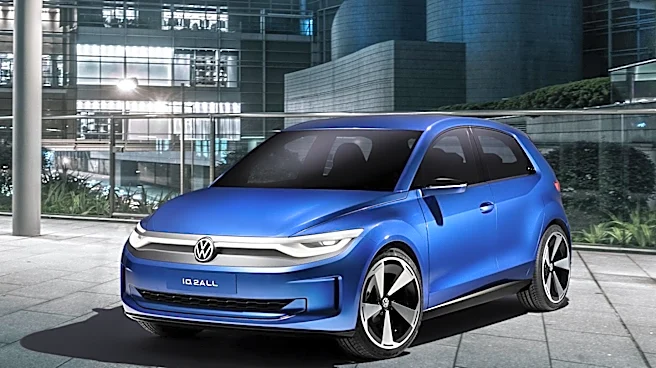
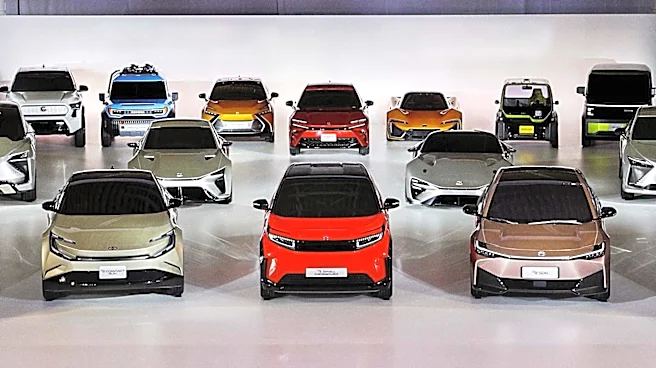
and production costs with partners. Companies like Volkswagen and Toyota are leading this shift, with Volkswagen planning to cut its global model lineup by up to 50% by 2030 and reduce product complexity by 75%. This move comes as legacy car companies face financial pressures from electric vehicle (EV) investments and competition from Chinese automakers. The strategy aims to streamline production and reduce expenses, allowing automakers to offer more affordable vehicles while maintaining profitability.
Why It's Important?
The shift towards decluttering in the automotive industry is significant as it reflects a broader trend of cost-cutting and efficiency in response to global competition. By simplifying their lineups, automakers can reduce manufacturing, marketing, and engineering complexities, which can lead to lower production costs and potentially lower prices for consumers. This strategy is crucial for legacy automakers to remain competitive against Chinese manufacturers, who can produce vehicles at lower costs. Additionally, the focus on fewer, more streamlined models could lead to increased profitability for automakers, allowing them to invest further in EV technology and other innovations.
What's Next?
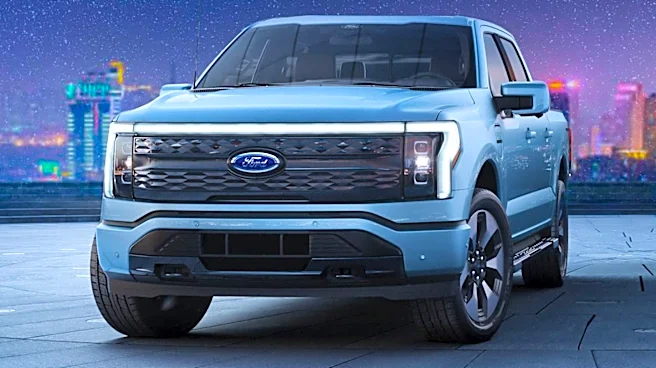
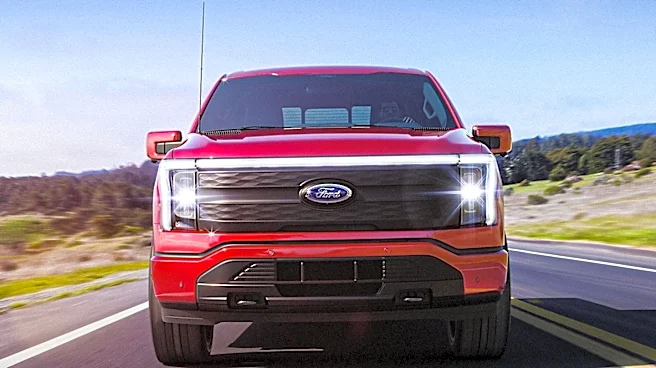
As automakers continue to simplify their lineups, consumers may see fewer model options but potentially more affordable vehicles. Companies like Ford are already planning to launch new vehicles built on simplified platforms, such as a $30,000 midsize electric pickup in 2027. This trend may also lead to more collaborations and partnerships within the industry to share technology and reduce costs. However, there is a risk that the reduction in model variety could make vehicle lineups less exciting for consumers. Automakers will need to balance cost-cutting with maintaining consumer interest and brand differentiation.