
What's Happening?
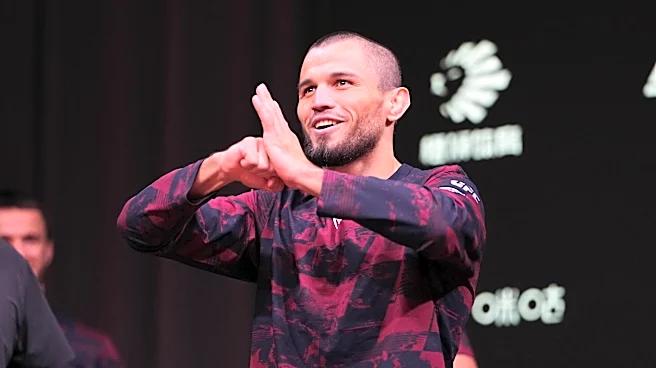
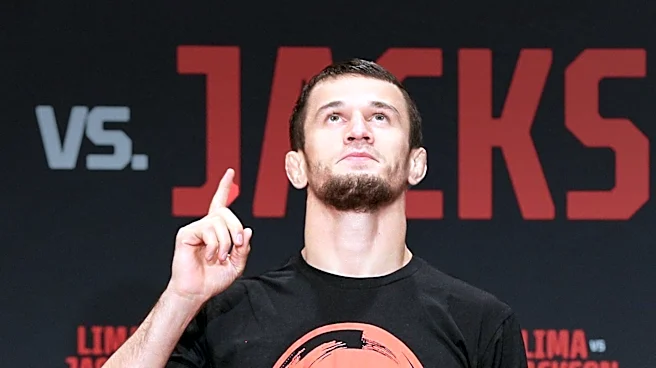
PFL lightweight champion Usman Nurmagomedov has issued his first public statement following a recent incident in Abu Dhabi where he and several associates were involved in an altercation with former UFC
bantamweight champion Merab Dvalishvili and his friend Saba Lazishvili. The incident, which led to Nurmagomedov's brief detention in an Abu Dhabi jail, reportedly stemmed from Dvalishvili having previously slapped Nurmagomedov's teammate, Akhmed Gadjimagomedov, in Georgia. Nurmagomedov's statement, posted on social media, featured a quote attributed to Marcus Aurelius: 'The moment you are hurt by an insult or pleased by praise, you are still a slave.' This quote is interpreted as Nurmagomedov's stance on not allowing external opinions to control his thoughts regarding the incident.
Why It's Important?
This event highlights the ongoing tensions and rivalries within the mixed martial arts community, extending beyond the professional fighting arena. The involvement of high-profile fighters like Nurmagomedov and Dvalishvili in an off-cage altercation can impact their public image, career trajectories, and the reputation of their respective promotions, PFL and UFC. While Nurmagomedov's philosophical response aims to project a sense of stoicism, the incident itself underscores the challenges of managing athlete conduct outside of sanctioned events. The legal consequences, including initial prison sentences and fines, demonstrate the serious repercussions for such actions, even for prominent sports figures.
Beyond the Headlines
The use of a philosophical quote by Nurmagomedov, regardless of its historical attribution, introduces a layer of intellectual discourse into a situation typically dominated by physical confrontation. This could be seen as an attempt to reframe the narrative around the incident, shifting focus from the violence to a message of personal resilience and mental fortitude. However, it also raises questions about the responsibility of public figures, particularly athletes, to model appropriate behavior. The incident also sheds light on the cultural and personal dynamics within fighting teams, where loyalty and perceived slights can escalate into broader conflicts. The quick resolution of the legal issues, reportedly with the intervention of Khabib Nurmagomedov, also points to the influence and networks within the MMA world.