





What's Happening?
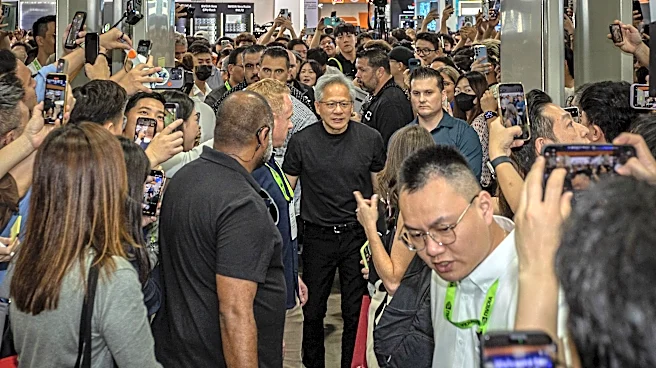
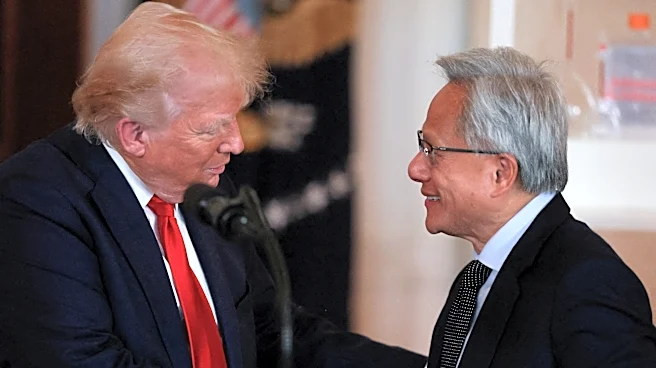
Nvidia experienced an eleven-day leadership crisis when CEO Jensen Huang resigned on November 12, 2026. Colette Kress, the company's Chief Financial Officer, assumed the role of interim CEO. However, on November 23, Nvidia's board unanimously reinstated
Huang after discussions with him and input from senior levels of the U.S. government. The company stated that its independent investigation into matters surrounding Huang would continue. During Huang's absence, analysts and investors considered internal candidates such as Colette Kress, who offered financial continuity, and Ian Buck, who represented deep technical expertise in CUDA and Nvidia's accelerated computing business. Other senior figures like chief scientist Bill Dally, chief technology officer Michael Kagan, and operations executive Debora Shoquist were also noted for their experience within the company. The incident highlighted Nvidia's lack of a publicly designated successor to its co-founder.
Why It's Important?
Nvidia's leadership uncertainty is significant due to the company's critical role in the global artificial intelligence (AI) infrastructure. As a primary supplier of advanced AI chips, networking products, and software, disruptions at Nvidia can impact chip suppliers, cloud operators, AI developers, and capital markets. The market's strong positive reaction to Huang's reinstatement, with Nvidia shares increasing by approximately 31.5% and adding $950 billion to its market value in a single session, underscores investor reliance on his leadership. This event also brings into focus the broader implications of corporate governance, national security, and government influence on vital technology companies, especially as advanced AI chips are increasingly viewed as economic assets with national security implications for the U.S. and its allies.
What's Next?
Nvidia's independent investigation into the circumstances surrounding Jensen Huang will continue, with legal advisers supporting the process. The company has pledged cooperation with government inquiries. Nvidia has also announced new governance measures, including the establishment of a board-level National Security and Export Control Oversight Committee and a search for a Chief Compliance Officer. Harvey Jones will remain board chair, separate from the CEO role. These measures aim to enhance corporate oversight and address concerns about the balance of power between a dominant founder, an independent board, investors, and the government. The effectiveness of these governance changes will be assessed by their ability to provide the board with information, authority, and the willingness to enforce standards regardless of leadership.
Beyond the Headlines
The Nvidia leadership crisis exposes deeper implications concerning corporate concentration, state influence, and the geopolitical struggle over computing power. The incident highlights the uneasy relationship between corporate power and national security, particularly given U.S. efforts to limit China's access to advanced semiconductors. The ongoing investigation into Megaspeed-related entities and their potential diversion of restricted AI computing technology toward China underscores the vulnerability of global supply chains and the challenges governments face in preventing evasion of export controls. This situation also raises questions about the long-term sustainability of companies heavily reliant on a single individual's leadership and the broader implications for the AI economy, where technological sovereignty and control over critical infrastructure are becoming paramount concerns for nations worldwide.