

What's Happening?
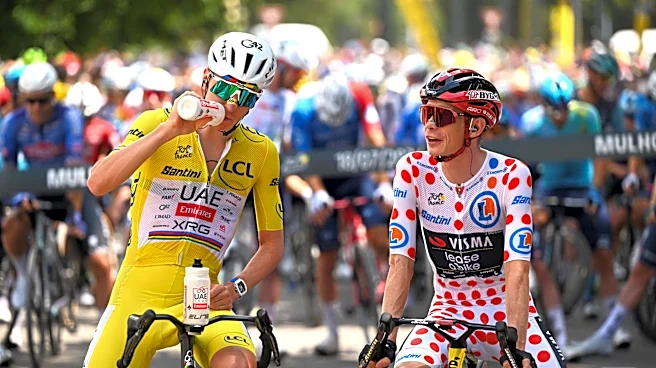
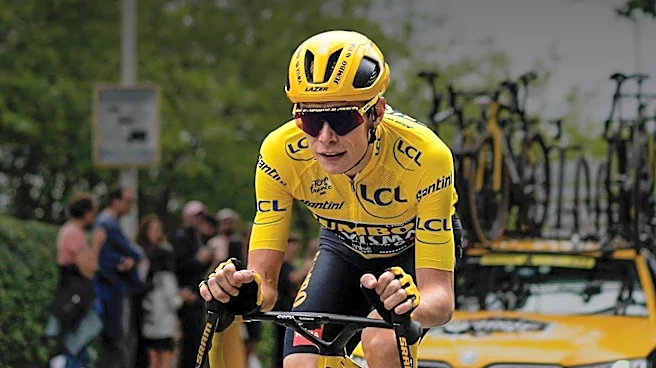
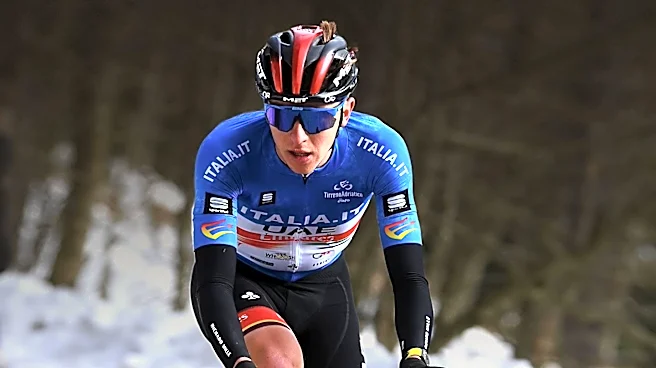
The Tour de France has sparked heated debates due to the implementation of nighttime doping controls. Key cyclists, including Jonas Vingegaard and Tadej Pogacar, were subjected to these tests at unconventional hours, leading to significant unrest among
participants and former stars. The controls, conducted by the International Testing Agency, are deemed necessary to prevent doping, as they eliminate any 'safe' periods for athletes to use performance-enhancing drugs. Despite the controversy, the controls are in line with the World Anti-Doping Code, which allows for such measures. The practice aims to address the long-standing doping issues in cycling, ensuring that athletes remain clean throughout the competition.
Why It's Important?
The controversy highlights the ongoing struggle within professional cycling to maintain a clean sport. Nighttime doping controls are a critical tool in the fight against doping, as they deter athletes from exploiting gaps in testing schedules. This approach is crucial for preserving the integrity of the sport and ensuring fair competition. However, the practice also raises concerns about the athletes' well-being, as it disrupts their rest and recovery, potentially affecting their performance. The balance between rigorous anti-doping measures and athletes' rights remains a contentious issue, with implications for how sports organizations enforce regulations while respecting competitors' needs.