
What's Happening?
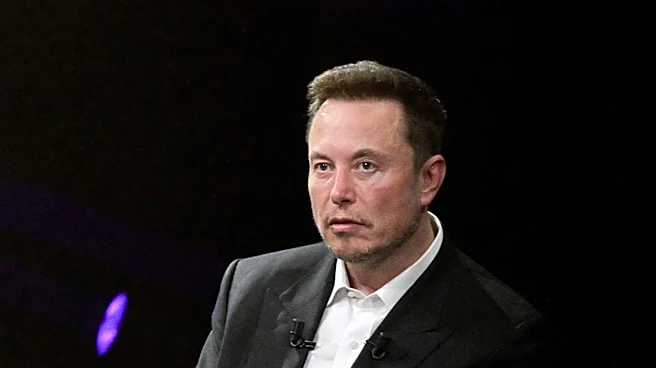
GameStop shares experienced a 3% jump immediately after Keith Gill, known as 'Roaring Kitty,' made his first post on X in approximately 18 months. Gill, who was instrumental in sparking the January 2021
short squeeze of GameStop stock, posted a picture of Nintendo's Mario in a cat costume. Although the initial rally faded before the closing bell, GameStop's stock is up 32% year-to-date. This surge occurred despite the post not containing any financial analysis or bullish predictions regarding GameStop's performance. The company, under CEO Ryan Cohen since September 2023, has been actively cutting expenses and improving profitability. For its fiscal second quarter ending August 1, GameStop reported operating income of $160.2 million, more than double the $66.4 million from the previous year. Selling, general, and administrative expenses also decreased from $218.8 million to $187.1 million. The company holds $5.4 billion in cash, marketable securities, digital assets, and related receivables, alongside a $4.9 billion investment in eBay.
Why It's Important?
The market's reaction to 'Roaring Kitty's' social media activity highlights the continued influence of retail investors and social media trends on specific U.S. stock valuations, particularly for 'meme stocks' like GameStop. This phenomenon can lead to significant, albeit sometimes temporary, volatility, impacting both individual investors and institutional funds. While GameStop has shown progress in its financial health, including increased operating income and reduced expenses, the stock's immediate movement based on a non-financial social media post underscores a speculative element in its valuation. The company's strategic shift towards collectibles, which now account for 45.1% of its total sales and generated $356.3 million in second-quarter revenue (a 57% increase year-over-year), is crucial for its long-term viability as traditional video game sales decline due to digital downloads. This shift indicates a broader trend in retail, where companies adapt their business models to changing consumer preferences and market dynamics.
What's Next?
The immediate future for GameStop's stock will likely remain sensitive to social media sentiment and retail investor activity, particularly any further communications from 'Roaring Kitty' or other influential figures. While the company's fundamental business transformation towards collectibles is a positive development, the stock's valuation may continue to be influenced by speculative trading rather than solely by its financial performance. Investors will be watching for GameStop's upcoming earnings reports to assess the sustained impact of its strategic shift and cost-cutting measures. The company's ability to further grow its collectibles segment and maintain financial discipline will be key indicators of its long-term stability. Regulatory bodies may also continue to monitor such market movements for potential manipulation or unusual trading patterns, given the history of meme stock volatility.
Beyond the Headlines
The recurring influence of figures like 'Roaring Kitty' on GameStop's stock price points to a deeper cultural and economic shift in U.S. financial markets. It highlights the democratization of investing through online platforms and social media, empowering retail investors to collectively impact stock valuations in ways previously dominated by institutional players. This trend raises questions about market efficiency, the role of fundamental analysis versus sentiment-driven trading, and the potential for herd behavior. It also underscores the challenges for companies like GameStop, which must navigate both traditional business transformations and the unpredictable dynamics of a highly engaged, often speculative, retail investor base. The phenomenon reflects a broader societal engagement with financial markets, where entertainment and community aspects can sometimes overshadow traditional investment principles, creating unique risks and opportunities.