


What's Happening?
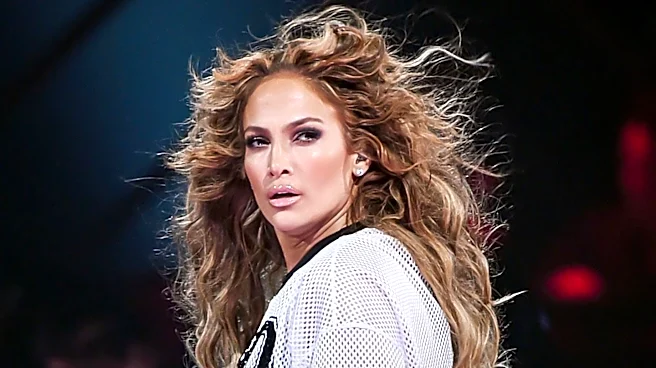
Jennifer Lopez has stated that her ethnicity as a Latina actress made it more difficult for her to secure Hollywood film roles throughout her career. In a Popcast interview published on November 20, Lopez explained that despite receiving some offers early
on, the selection was limited, compelling her to create her own opportunities rather than waiting for casting directors. She specifically referenced not being 'a white actress' as a factor influencing the roles available to her. While acknowledging increased diversity in casting, Lopez suggested that the pressure for performers to establish their own opportunities persists. These remarks have generated online criticism, with some commenters pointing to her extensive filmography and suggesting that aging in Hollywood, rather than ethnicity, might be a more significant factor in her current casting struggles.
Why It's Important?
Jennifer Lopez's comments highlight ongoing discussions about racial representation and ageism within the Hollywood industry. Her perspective, coming from a highly successful Latina actress, underscores the systemic challenges that performers from underrepresented groups can face, even with significant star power. The ensuing online debate reflects differing views on the extent to which ethnicity or age impacts an actor's career trajectory in Hollywood. This conversation is crucial for understanding the complexities of diversity and inclusion efforts in entertainment, as it brings to light the lived experiences of individuals within the industry. For aspiring actors and industry stakeholders, Lopez's remarks serve as a reminder of the persistent barriers that can exist, prompting further examination of casting practices and the types of roles offered to diverse talent. The discussion also touches upon the broader societal implications of how race and age are perceived and valued in public life.
What's Next?
The discussion initiated by Jennifer Lopez's comments is likely to continue within entertainment circles and among the public. It may prompt further dialogue among industry professionals, casting directors, and production companies regarding equitable casting practices and the creation of more diverse roles. Actresses, particularly women of color and older actresses, may share their own experiences, contributing to a broader understanding of the challenges. This could lead to increased advocacy for policy changes within Hollywood to address both racial and age-related biases. Additionally, Lopez's approach of creating her own projects may inspire other artists to take similar initiatives, fostering a more self-reliant and diverse creative landscape. The ongoing conversation will likely influence future casting decisions and the types of narratives prioritized by studios and streaming platforms, aiming for more inclusive representation.
Beyond the Headlines
Beyond the immediate controversy, Jennifer Lopez's statements delve into the deeper, often unspoken, realities of identity and opportunity in a highly visible industry. Her experience speaks to the concept of 'invisible labor'—the effort required by individuals from marginalized groups to create opportunities that might be readily available to others. The public's reaction, oscillating between empathy and skepticism, reveals societal biases and expectations placed on successful individuals, particularly women, regarding their aging and career longevity. This situation also touches upon the ethical responsibility of the entertainment industry to reflect the diversity of its audience and to challenge traditional archetypes. The ongoing dialogue about Lopez's career trajectory, whether attributed to ethnicity or age, contributes to a larger cultural critique of how value is assigned to performers based on demographic factors, and the persistent struggle for equitable treatment and recognition in a competitive field.