






What's Happening?
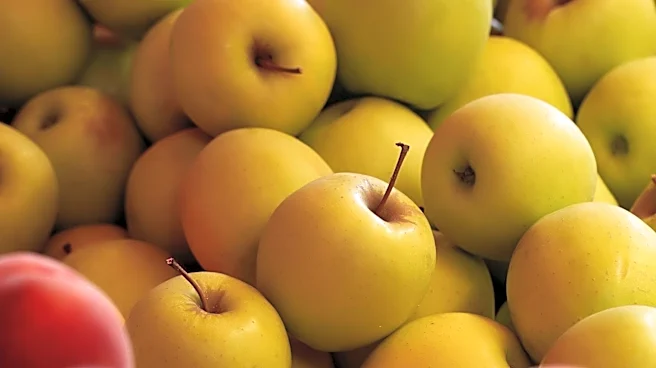
New Zealand Queen apples, a modern variety resulting from a cross between the Gala and Splendor apples, are primarily grown in New Zealand. These apples are characterized by their deep red-crimson skin with some russetting, white and fine-grained flesh,
and a crisp, very juicy, and sweet flavor with subtle notes of pear and banana. They are available from spring through early fall. While popular globally, they are particularly sought after in Asian markets, where they are exported from New Zealand. The development of this variety occurred in the Hawke’s Bay region of New Zealand, a key apple-growing area, where the temperate climate is well-suited for their cultivation. Apples have been a significant crop in New Zealand since the early 1800s, introduced by European colonizers, and are grown for both domestic consumption and export.
Why It's Important?
The popularity of New Zealand Queen apples, especially in Asian markets, highlights the global demand for specific fruit varieties that meet consumer preferences for taste and texture. This export success contributes to New Zealand's agricultural economy, showcasing the country's role as a significant producer and exporter of high-quality produce. For U.S. consumers and the agricultural industry, the success of such varieties can influence breeding programs and market trends, potentially leading to the introduction of similar apple types or increased competition in the global fruit market. The focus on characteristics like crispness, juiciness, and moderate sweetness reflects evolving consumer tastes, which can guide U.S. growers in selecting and developing new apple varieties to remain competitive.
What's Next?
The continued success and export of New Zealand Queen apples suggest a sustained demand in international markets, particularly in Asia. This could lead to further expansion of their cultivation in New Zealand or inspire other apple-producing regions to develop similar varieties that cater to these preferences. For U.S. fruit importers and retailers, monitoring the availability and demand for these apples will be crucial for sourcing decisions. Additionally, the emphasis on specific flavor profiles and textures in the New Zealand Queen apple may influence future breeding efforts in the U.S., as growers look to replicate or innovate upon these desirable traits to capture market share and meet consumer expectations.
Beyond the Headlines
The story of the New Zealand Queen apple underscores the intricate global supply chains and the impact of agricultural innovation on international trade. The development of specific apple varieties like the Queen apple, tailored to consumer preferences, reflects a broader trend in the food industry towards specialized and high-quality produce. This also highlights the importance of geographical advantages, such as New Zealand's temperate climate, in cultivating unique and desirable crops. The success of these apples in diverse markets, particularly in Asia, illustrates the interconnectedness of global food systems and the continuous evolution of agricultural practices to meet worldwide demand.