






What's Happening?
A historic office building located at 417 Montgomery Street in San Francisco's Financial District has been sold for approximately $25 million. This price represents a notable discount from its previous sale price of $30 million in 2006 and is significantly
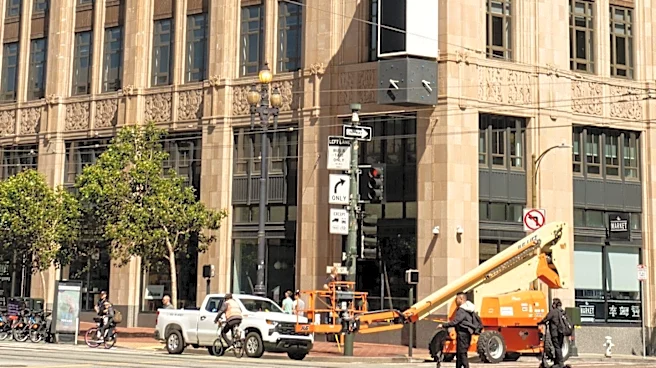
lower than its assessed market value of about $54 million. The property, built in 1936 and known as the Lurie Building, was the first major office project to commence construction in San Francisco after the Great Depression. Peninsula-based Kenson Ventures and Wheatley Properties partnered to acquire the building, marking their largest investment in the city. The new owners plan to remodel the mostly vacant 10-floor building, aiming to attract new tech tenants. This sale occurs as San Francisco's office market begins to show signs of recovery, largely due to AI companies leasing space, despite the office vacancy rate still hovering around 30%.
Why It's Important?
This sale highlights the ongoing recalibration of commercial real estate values in major U.S. cities, particularly San Francisco, which has experienced a prolonged period of high office vacancy rates. The significant discount on a historic, well-located property indicates that while the market is stabilizing, asset valuations are still adjusting to post-pandemic realities and evolving work patterns. For investors like Kenson Ventures and Wheatley Properties, this represents an opportunity to acquire prime real estate at a reduced cost, with the intention of revitalizing it to meet the demands of the burgeoning tech sector, especially AI companies. The success of their remodeling efforts and ability to attract tenants could serve as a bellwether for other distressed commercial properties in the city, influencing future investment and development strategies. This trend also underscores the 'flight to quality' phenomenon, where older buildings are being renovated to compete with newer, amenity-rich spaces.
What's Next?
The new owners, Kenson Ventures and Wheatley Properties, are embarking on a remodel of the 417 Montgomery Street building. Their immediate focus will be on transforming the property to appeal to tech tenants, particularly those in the artificial intelligence sector, which has shown a growing demand for office space in San Francisco. The success of this renovation and subsequent leasing efforts will be closely watched as an indicator of the broader recovery trajectory for San Francisco's downtown office market. If their strategy proves successful, it could encourage further investment in older, discounted properties, leading to a wave of revitalization projects across the city. Conversely, challenges in attracting tenants could signal continued headwinds for the commercial real estate sector, potentially leading to more properties being sold at significant discounts.
Beyond the Headlines
The sale of the Lurie Building at a substantial discount reflects a deeper shift in the urban commercial landscape, moving beyond just market fluctuations to a re-evaluation of what constitutes valuable office space. The emphasis on attracting tech tenants, particularly AI companies, suggests a strategic pivot towards industries that are driving current economic growth and are more likely to maintain a physical office presence. This trend could lead to a bifurcation of the office market, where properties that can adapt to the specific needs and preferences of high-growth sectors thrive, while those that cannot face prolonged vacancies and depreciating values. Furthermore, the revitalization of historic buildings for modern tech use presents an interesting intersection of preservation and innovation, potentially setting a precedent for how older urban infrastructure can be repurposed to meet contemporary economic demands while retaining architectural heritage.