





What's Happening?
The Organization of the Petroleum Exporting Countries (OPEC) has confirmed the participation of Secretary General Haitham Al Ghais and Senior Energy Demand Analyst Raed Alaameri at the South Sudan Oil & Power (SSOP) 2026 conference, scheduled for November
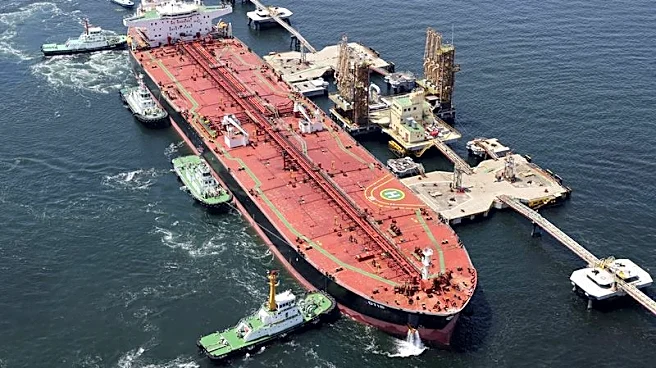
24–25 in Juba. South Sudan aims to significantly increase its crude oil production from the current 170,000–174,000 barrels per day (bpd) to 230,000 bpd in the short term and 450,000 bpd over the longer term. Achieving these targets necessitates substantial investment in existing fields, new exploration, and supporting infrastructure. Al Ghais will provide an international oil market perspective, while Alaameri will share insights from OPEC's World Oil Outlook 2026, which projects a 23% increase in global primary energy demand by 2050, with oil demand reaching approximately 124 million bpd. The report also estimates that the oil industry will require $17.7 trillion in investment between 2026 and 2050 to meet this projected demand.
Why It's Important?
OPEC's engagement at SSOP 2026 is crucial for South Sudan's ambitions to boost oil production and attract foreign investment. For the U.S. and global energy markets, increased oil production from South Sudan could contribute to overall supply stability, potentially influencing international oil prices. The projected global oil demand increase and the significant investment required, as highlighted by OPEC, underscore the ongoing importance of oil in the global energy mix, despite the push for renewable energy. U.S. oil companies and investors may find new opportunities in South Sudan's upstream sector, particularly in brownfield redevelopment, enhanced oil recovery, and exploration of the country's 14 available exploration blocks. The discussions at SSOP 2026 will provide valuable insights into the future of oil supply and demand, impacting strategic energy planning and investment decisions worldwide.
What's Next?
South Sudan will continue its efforts to optimize production from mature fields and attract investment into its exploration blocks. The SSOP 2026 conference will serve as a key platform for policymakers, national and international oil companies, investors, and service providers to explore these opportunities. Following the conference, South Sudan will likely intensify its outreach to potential investors, leveraging the insights and connections made. The country's participation in the OPEC and non-OPEC Declaration of Cooperation provides a framework for ongoing dialogue on oil market stability. The long-term goal is to secure the necessary investments to meet its ambitious production targets and strengthen its position as an oil producer, contributing to global energy security.
Beyond the Headlines
The focus on increasing oil production in South Sudan, supported by OPEC, highlights the complex interplay between energy security, economic development, and global climate goals. While many nations are transitioning to renewable energy, the projections from OPEC indicate that oil will remain a critical energy source for decades, requiring massive investments. This situation presents a dilemma for countries like South Sudan, which rely heavily on oil revenues for economic growth and development. The discussions at SSOP 2026 will not only address immediate production targets but also touch upon the broader implications of sustaining oil supply in a world increasingly concerned with climate change. The event could also shed light on the geopolitical dynamics of oil production and the role of international organizations like OPEC in shaping global energy policies.