






What's Happening?
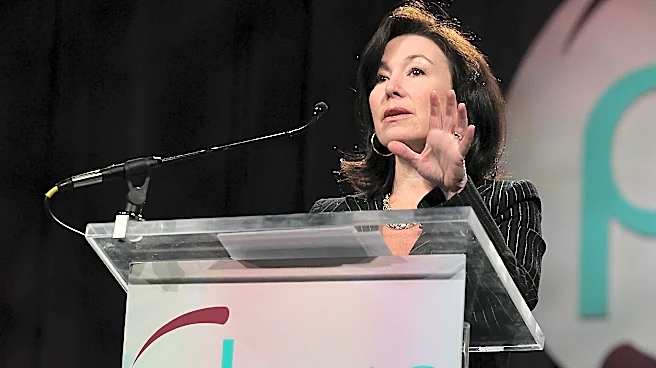
Safra Catz, the Executive Vice Chair of Oracle, is scheduled to participate in Globant Converge 2026, a virtual event focusing on AI-native services. The event, themed 'Reinventing businesses for the AI-native era,' will take place on December 10, 2026.
Globant, a technology services company, will use this platform to introduce its Glob.AI platform, which aims to integrate human-supervised AI Pods with business management frameworks to deliver measurable business outcomes. The discussions at Converge 2026 will delve into the foundational aspects of AI-native services, including the necessary infrastructure and architecture for scaling AI, and how Glob.AI assists companies in transforming their AI investments into tangible production-ready results. Catz, who joined Oracle in 1999 and played a key role in the 2005 acquisition of PeopleSoft, will be among several prominent leaders from various technology and business sectors contributing to the event.
Why It's Important?
The participation of a high-profile executive like Safra Catz from Oracle at Globant Converge 2026 underscores the growing importance of artificial intelligence in shaping the future of business and technology. Her involvement highlights the strategic shift towards AI-native services, indicating that major technology players are actively investing in and promoting AI-driven solutions. This trend is crucial for U.S. industries as it signifies a move towards more efficient, outcome-based service delivery models, potentially leading to significant transformations in how companies operate and compete. Businesses that embrace AI-native services stand to gain competitive advantages through enhanced scalability and measurable results, while those that lag may face challenges in adapting to the evolving technological landscape. The event's focus on practical AI implementation suggests a broader industry push to move beyond experimental AI applications to concrete, production-ready solutions.
What's Next?
Globant Converge 2026, scheduled for December 10, 2026, will serve as a key platform for industry leaders to discuss the future of AI-native services. Following the event, it is anticipated that there will be increased adoption and development of AI-native platforms like Glob.AI, as companies seek to integrate AI more deeply into their operational frameworks. The insights shared by executives such as Safra Catz could influence strategic decisions across various sectors, encouraging businesses to re-evaluate their current AI strategies and accelerate their transition to AI-native models. This could lead to new partnerships, investments in AI infrastructure, and a greater emphasis on AI-driven innovation in the coming years. The virtual nature of the event also ensures broad accessibility, potentially disseminating these ideas to a wider audience of business and technology professionals globally.
Beyond the Headlines
The emphasis on 'AI-native services' at Globant Converge 2026, with figures like Safra Catz participating, points to a deeper paradigm shift in how technology services are conceived and delivered. This isn't merely about integrating AI into existing systems, but about building services from the ground up with AI as a core component. This shift has profound implications for the workforce, potentially requiring new skill sets and a re-evaluation of human-AI collaboration models. Ethically, the development of human-supervised AI Pods, as described by Globant, suggests an ongoing effort to balance AI's autonomous capabilities with human oversight, addressing concerns about accountability and control. Legally, the increasing reliance on AI-native services may necessitate new regulatory frameworks to govern data privacy, algorithmic bias, and intellectual property in an AI-driven economy. Culturally, the widespread adoption of AI-native services could reshape consumer expectations and interactions with technology, leading to more personalized and predictive experiences.