




What's Happening?
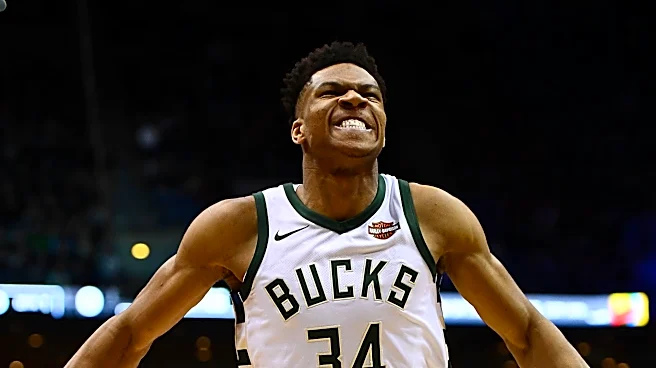
Former NBA player Tim Hardaway Sr. has publicly criticized Giannis Antetokounmpo's basketball IQ, stating that "Cooper Flagg understands the game better than Giannis." Hardaway's comments align with earlier remarks made by Doc Rivers, Antetokounmpo's former
Milwaukee Bucks head coach, who also suggested that Antetokounmpo does not possess a "super-high basketball IQ." Hardaway, a Hall of Fame point guard, made these statements on the "Crossover Podcast" while discussing Cooper Flagg's impressive performance, where Flagg scored 43 points, 10 rebounds, six assists, and three steals. Hardaway drew a comparison between Flagg and Antetokounmpo, noting that both were coached by Jason Kidd early in their careers, with Kidd giving them significant ball-handling duties to develop their basketball IQ. Hardaway concluded that Flagg has absorbed more from that experience, becoming a more versatile player, while Antetokounmpo, despite his dominance, is not as versatile due to a perceived lack of game understanding.
Why It's Important?
Tim Hardaway Sr.'s comments, echoing Doc Rivers' earlier criticisms, bring a significant spotlight onto the perceived basketball IQ of one of the NBA's most dominant players, Giannis Antetokounmpo. This discussion is important because it challenges the conventional narrative around a two-time MVP, suggesting that raw athleticism and scoring ability, while crucial, may not fully compensate for a deeper understanding of the game. For the Milwaukee Bucks, this could create internal pressure or external scrutiny regarding their star player's development and strategic role. For young players like Cooper Flagg, being praised by a Hall of Famer like Hardaway, especially in comparison to an established superstar, significantly boosts his profile and highlights the value placed on comprehensive game understanding in the NBA. This debate also fuels broader discussions among fans and analysts about what truly constitutes a 'great' player—whether it's sheer physical dominance or a combination of physical prowess and strategic intelligence.
What's Next?
The ongoing debate regarding Giannis Antetokounmpo's basketball IQ, fueled by comments from Tim Hardaway Sr. and Doc Rivers, is likely to continue generating discussion within NBA circles, among sports analysts, and on social media. Antetokounmpo himself, along with his current team, the Milwaukee Bucks, may face questions about these criticisms. It remains to be seen if these remarks will prompt any public response from Antetokounmpo or his camp, or if they will influence how he is perceived or coached in the future. For Cooper Flagg, the praise from Hardaway could further elevate his already high expectations as he progresses in his career. This narrative could also lead to more in-depth analyses of player development strategies, particularly how coaches like Jason Kidd aim to cultivate basketball IQ in young talents. The conversation underscores the continuous evaluation of players' skills beyond just statistics.
Beyond the Headlines
The critique of Giannis Antetokounmpo's basketball IQ by figures like Tim Hardaway Sr. and Doc Rivers delves into a deeper philosophical debate within sports: the balance between innate talent and learned strategic intelligence. In an era where athleticism often dominates, these comments highlight the enduring value of a high basketball IQ, which encompasses court vision, decision-making under pressure, and understanding complex game situations. This discussion also touches on the role of coaching in developing these less tangible skills, as both Antetokounmpo and Cooper Flagg were coached by Jason Kidd with the aim of enhancing their game understanding. The comparison between a seasoned MVP and a rising young talent like Flagg suggests a potential shift in how future generations of players might be evaluated, emphasizing comprehensive skill sets over pure physical dominance. It also raises questions about how much a player's 'IQ' can evolve over their career, especially for those who enter the league with exceptional physical gifts.