



What's Happening?
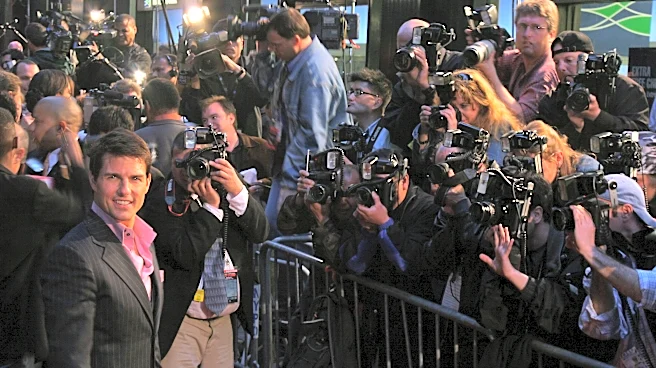
Discussions surrounding Alexander Horwath’s 2024 essay film, 'Henry Fonda for President,' have drawn parallels between classic Hollywood 'auteur actors' like Henry Fonda and contemporary figures such as Tom Cruise. The film, which premiered at the Berlinale,
examines actors who, despite not writing or directing, shape a coherent body of work through their material choices. Tom Cruise is cited as a modern analogue to these classic actors, whose filmography demonstrates a clear artistic vision. This comparison arises in the context of exploring how actors' choices contribute to their cinematic legacy and influence the commercial landscape of American cinema. The essay film itself is noted for its collage-like structure, weaving together clips and interviews to create a grand portrait of American and Hollywood history.
Why It's Important?
The comparison of Tom Cruise to classic 'auteur actors' like Henry Fonda underscores a significant aspect of Hollywood's star system and its impact on film production and audience reception. It highlights how certain actors, through their consistent choices and performances, can exert a directorial-like influence over their body of work, shaping narratives and genres. This perspective is crucial for understanding the power dynamics within the film industry, where a star's brand can drive projects and define cinematic trends. For audiences, it offers a framework for appreciating the artistic contributions of actors beyond their on-screen performances, recognizing their role in curating their careers and, by extension, influencing the broader cultural landscape of American cinema. The discussion also touches upon the commercial viability of certain actors, suggesting that a 'Tom Cruise for President' film would likely be a commercial success, reflecting his enduring appeal and market power.
What's Next?
The ongoing discussion around essay films and the 'auteur actor' concept could lead to a re-evaluation of how actors' careers are perceived and analyzed within film criticism and academia. This might encourage more in-depth studies into the filmographies of influential actors, examining their choices and their impact on cinematic history. For the commercial film industry, the recognition of an actor's 'auteur' status could further empower stars in their creative decisions, potentially leading to more actor-driven projects or greater creative control for established figures. This trend could also influence how film festivals and awards committees recognize and honor actors, moving beyond individual performances to acknowledge their broader artistic contributions to cinema.
Beyond the Headlines
The deeper implication of this discussion lies in the evolving definition of authorship in cinema. Traditionally, authorship is attributed to directors, but the 'auteur actor' concept challenges this by suggesting that actors, through their consistent artistic choices, can also imprint a distinct vision onto their work. This raises questions about the collaborative nature of filmmaking and where creative control truly resides. Ethically, it prompts consideration of how much influence a single individual should wield in shaping cultural narratives through their film choices. Culturally, it reflects a broader societal fascination with celebrity and the power of individual personalities to define artistic movements and commercial success, highlighting the enduring appeal of figures like Tom Cruise in shaping the American cinematic experience.