


What's Happening?
MLB.com has published an article spotlighting Major League Baseball players who were traded as prospects and later developed into MVP finalists. The piece emphasizes that while trades often favor teams acquiring proven players, there are instances where
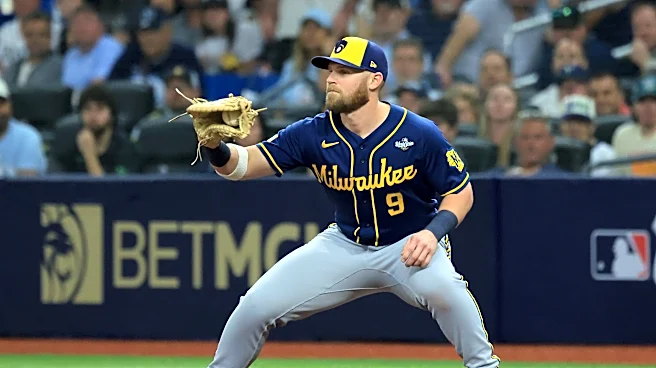
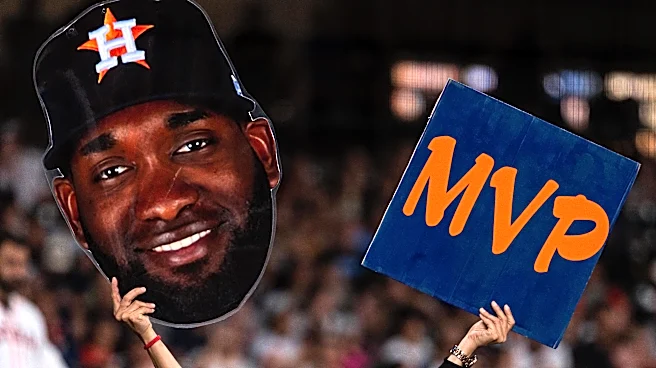
prospects blossom unexpectedly after being moved. This year's American League and National League MVP finalists include Yordan Álvarez (Houston), Junior Caminero (Tampa Bay), Bobby Witt Jr. (Kansas City), Pete Crow-Armstrong (Cubs), Shohei Ohtani (Dodgers), and Brice Turang (Milwaukee). Of these six, three—Álvarez, Caminero, and Crow-Armstrong—were traded during their prospect days before achieving superstar status. The article details the circumstances of these trades, often highlighting how the original teams misjudged the prospects' potential. For example, Yordan Álvarez was traded by the Dodgers to Houston, and Junior Caminero was traded by the Cleveland Guardians to Tampa Bay. Pete Crow-Armstrong was traded by the Mets to the Cubs.
Why It's Important?
This trend of traded prospects becoming MVP finalists underscores the inherent unpredictability and high-stakes nature of player development and talent evaluation in Major League Baseball. For teams, it highlights the significant risk involved in trading young talent, as a seemingly minor prospect can evolve into a franchise cornerstone. Conversely, it demonstrates the potential rewards for teams that successfully identify and develop undervalued prospects. These stories can influence future trade strategies, potentially making teams more hesitant to part with promising young players, even for established veterans. The success of these players also impacts the competitive balance of the league, as teams like Houston and Tampa Bay have benefited immensely from these 'missed' evaluations by other organizations. It also fuels fan discussions and debates about 'what if' scenarios for their favorite teams.
What's Next?
The continued success of players like Yordan Álvarez, Junior Caminero, and Pete Crow-Armstrong will likely reinforce the importance of robust scouting and player development systems across MLB organizations. Teams will continue to invest heavily in these areas, aiming to avoid similar 'bad trades' as acknowledged by Cleveland's president of baseball operations regarding the Caminero trade. The narrative also sets a precedent for how prospects are valued in trade negotiations, potentially increasing their perceived worth. As these players continue their careers, their ongoing performance will serve as a constant reminder of the long-term impact of early-career decisions. Future MVP races will undoubtedly feature more players who have overcome initial organizational skepticism or found their stride after a change of scenery, further cementing this phenomenon in baseball lore.
Beyond the Headlines
Beyond the immediate impact on team rosters and MVP awards, these stories delve into the psychological and developmental aspects of professional sports. They illustrate that a player's environment, coaching, and opportunity can significantly influence their trajectory. A prospect who might struggle in one system could thrive in another, suggesting that talent is not always static but can be nurtured and unlocked under the right conditions. The article also touches on the human element of these decisions, where general managers and scouting departments make high-pressure choices with incomplete information. The 'what if' scenarios, such as the Dodgers' initial dismissal of Yordan Álvarez, serve as cautionary tales, emphasizing that even the most sophisticated analytical models cannot always predict the full extent of human potential and development in the long run.