





What's Happening?
Global capital investment in data centers is projected to reach approximately $6.7 trillion by 2030, driven largely by the escalating demand for Artificial Intelligence (AI) computing power. According to McKinsey estimates, about $5.2 trillion of this
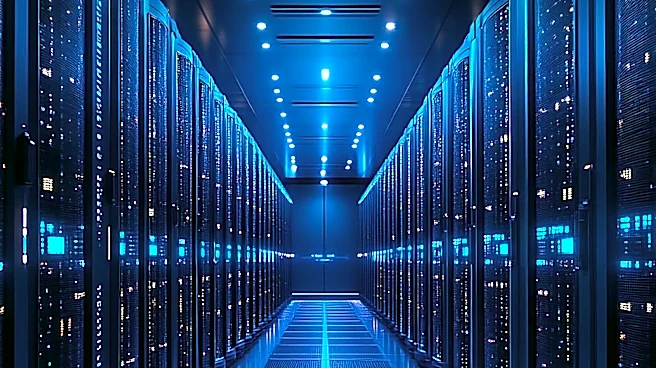
investment will be allocated to infrastructure supporting AI workloads, with the remaining $1.5 trillion for conventional computing. This massive investment signifies a multi-trillion-dollar infrastructure transformation, extending beyond server buildings to encompass semiconductors, GPUs, memory, power generation, cooling systems, and real estate. The demand for data center capacity is expected to nearly triple by 2030, reaching roughly 219 GW, with AI workloads accounting for approximately 70% of this total. This surge is transforming computing from an IT expense into a strategic infrastructure asset, akin to energy or telecommunications, with governments and companies increasingly prioritizing domestic computing capacity.
Why It's Important?
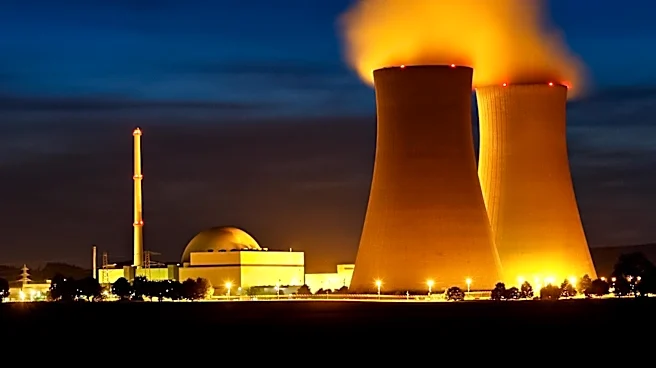
This monumental investment in data centers has profound implications for the U.S. economy and various industries. The demand for computing hardware, particularly GPUs, will continue to fuel the semiconductor industry, impacting companies like NVIDIA and AMD. The need for increased electricity will place significant pressure on U.S. power grids and utilities, necessitating substantial investments in new generation capacity, transmission lines, and cooling systems. This will create opportunities for companies in renewable energy, nuclear power, and electrical equipment manufacturing. The construction sector will also see a boom in building specialized, high-density data centers, which are more expensive to construct due to advanced cooling and electrical requirements. Furthermore, the shift towards viewing compute as a strategic national asset could influence U.S. policy on technology infrastructure, potentially leading to incentives for domestic data center development and manufacturing of critical components, impacting supply chain resilience and national security.
What's Next?
The immediate future will see continued rapid expansion of data center construction and significant capital expenditure from major U.S. technology companies like Amazon, Alphabet, Microsoft, and Meta, who are already committing hundreds of billions to AI infrastructure. The biggest bottleneck will likely be the availability of power and the speed at which utilities can build out necessary grid infrastructure. This disparity between the rapid pace of AI innovation and the slower timeline for energy infrastructure development will drive innovation in power solutions, including behind-the-meter generation and alternative energy sources. Investors will increasingly scrutinize the returns on these massive capital deployments, questioning whether AI growth can justify the expenditure. The industry will also likely see a continued focus on water-efficient cooling technologies due to environmental concerns and regional water stress, influencing site selection and design of new facilities. The emergence of 'sovereign AI' infrastructure will also drive demand for localized data centers to meet data residency and national security requirements.
Beyond the Headlines
The data center boom represents a fundamental reordering of economic priorities, where the physical infrastructure underpinning the digital world becomes as critical as traditional industrial assets. This shift has ethical and environmental dimensions, particularly concerning the massive energy and water consumption of these facilities. The increasing reliance on AI, powered by these data centers, raises questions about the environmental footprint of technological progress and the need for sustainable solutions. Culturally, the 'factories for intelligence' concept highlights a new era of production, where computation itself is manufactured, transforming raw data and electricity into software, language, and autonomous decisions. This also brings into focus the less glamorous but equally vital industries—like transformer manufacturing and electrical engineering—that are now strategically connected to the AI revolution, underscoring the interconnectedness of seemingly disparate sectors in the modern economy. The long-term implications include potential shifts in global economic power based on access to and control over this critical computing infrastructure.