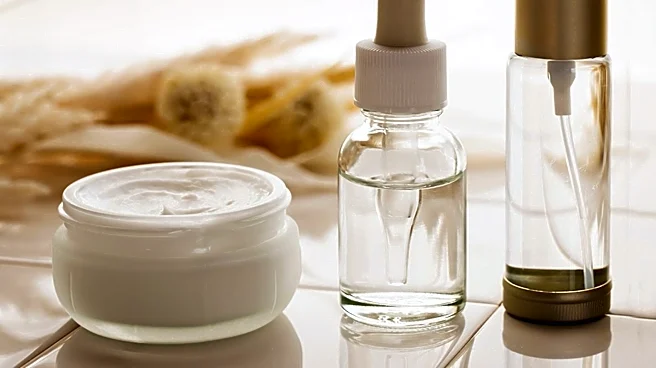




What's Happening?
The 'skinimalism' trend, also known as 'skin detox,' is gaining traction as a response to the increasing complexity of skincare routines. This movement encourages individuals to reduce the number of products and active ingredients they apply to their
skin, aiming to prevent irritation and allow the skin to regenerate naturally. For years, personal care routines have often involved numerous steps, including toners, essences, acids, retinols, and oils. This extensive product use has frequently led to skin irritation and dehydration, prompting consumers to seek more products to soothe issues caused by previous applications. The skinimalism approach emphasizes that a simple routine consisting of a gentle cleanser, a hydrating moisturizer, and daily SPF can be more beneficial for most skin types than a multi-product regimen. The trend suggests that many skin problems are not due to a lack of products but rather an excess of them, turning the face into an 'improvised laboratory.'
Why It's Important?
This trend is significant for the U.S. beauty and skincare industry, which has long thrived on promoting multi-step routines and a wide array of specialized products. The shift towards skinimalism could lead to a re-evaluation of product development and marketing strategies, potentially impacting sales of niche or redundant skincare items. Consumers, particularly those influenced by social media platforms like TikTok, where 78% of users are more likely to purchase cosmetics, are increasingly exposed to algorithms that favor rapid transformations over long-term skin health. This has contributed to a cycle of product use and subsequent irritation. Skinimalism challenges this cycle by advocating for a more mindful approach, focusing on the skin's actual needs rather than market trends. This could empower consumers to make more informed choices, potentially reducing unnecessary spending on products that may do more harm than good. The emphasis on protecting the skin's natural barrier, rather than constantly breaking it down with exfoliants and then attempting to repair it, highlights a fundamental shift in understanding skin health.
What's Next?
The skinimalism trend is expected to continue influencing consumer behavior and product innovation in the U.S. beauty market. Skincare brands may adapt by focusing on multi-functional products, simplified ingredient lists, and formulations that support the skin's natural barrier. There could be a rise in demand for 'milky' textures, such as hydrating and cleansing milks, which are perceived as gentler and less irritating. Consumers are encouraged to experiment by gradually removing active ingredients from their routines for a period, such as 21 days, to observe their skin's response. If irritation subsides, it suggests that product excess was the issue. If problems persist, consulting a dermatologist is recommended over adding more products. This shift could lead to a more educated consumer base that prioritizes skin health and simplicity over complex, product-heavy routines, potentially fostering a more sustainable and less wasteful approach to skincare.
Beyond the Headlines
Beyond its immediate impact on product sales and consumer routines, skinimalism reflects a broader cultural shift towards minimalism and conscious consumption. In an era of information overload and constant digital stimulation, there's a growing desire for simplicity and authenticity in various aspects of life, including personal care. The trend also highlights the ethical implications of marketing in the beauty industry, particularly how social media algorithms can drive consumption patterns that may not align with individual well-being. By encouraging a 'less is more' approach, skinimalism challenges the notion that more expensive or numerous products equate to better results. It promotes a deeper connection with one's body and its natural processes, moving away from the idea of the face as a 'testing ground' for an endless array of cosmetic solutions. This could foster a more holistic understanding of beauty, where natural glow and healthy skin are valued over artificial perfection or filter-driven aesthetics.