






What's Happening?
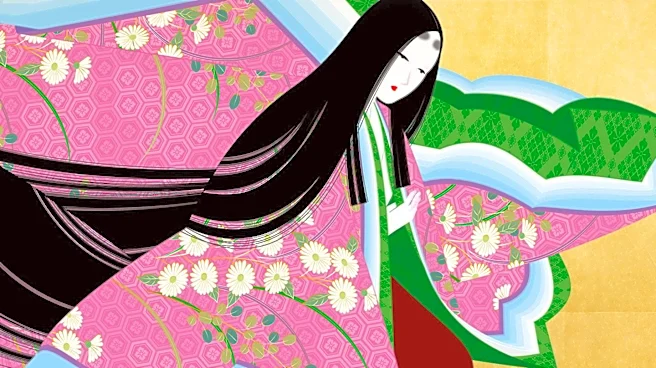
YGOrganization has released reference art and detailed lore for the character 'Yoa the Plague Ashtra.' The character's story and name are rooted in a classic Edo period rakugo tale titled 'kaze no kamiokuri' (sending off the god of wind). In this traditional
story, villagers fall ill, and a ritual is performed where a doll is created and cast into a river to symbolically drive away the illness. The tale concludes with a fisherman catching the doll, which then comes to life as the god of pestilence, only for the fisherman to cleverly retort with a pun. Yoa's character design incorporates elements like kintsugi (indicating wounds from branding, violence, and torture), a divine crest with wind, crow wings, and dog fangs, and jade gemstones that are cracked, signifying misfortune rather than health. The narrative frames depict Yoa being blamed and sacrificed during village tragedies, particularly when a plague spreads.
Why It's Important?
The detailed lore and art for 'Yoa the Plague Ashtra' provide a rich cultural context for fans of the associated media, likely a card game or similar fictional universe. By drawing directly from Edo period Japanese folklore, the character gains depth and historical resonance, enriching the narrative for players and enthusiasts. This approach highlights how traditional stories and cultural practices can be reinterpreted and integrated into modern entertainment, offering a unique blend of historical narrative and contemporary fantasy. The character's tragic backstory, involving blame and sacrifice, explores themes of scapegoating and societal response to crisis, which can resonate with audiences on a deeper level. The intricate design details, such as the cracked jade gemstones, add layers of symbolic meaning, enhancing the overall artistic and narrative quality of the character.
What's Next?
The release of detailed reference art and lore typically precedes or accompanies the introduction of a character into a game or story. For fans, this means a deeper understanding of 'Yoa the Plague Ashtra' and their role within the fictional universe. This information could be used to develop new strategies in a card game, inform fan theories, or inspire fan art and stories. The character's tragic origins and connection to pestilence suggest potential future storylines involving conflict, redemption, or further spread of misfortune within the narrative. The integration of Edo period folklore might also encourage creators to explore more traditional Japanese narratives for future character development, potentially leading to a richer, more culturally diverse fictional world. The detailed background also sets a precedent for the depth of lore expected for future character releases.
Beyond the Headlines
The character of 'Yoa the Plague Ashtra' serves as a fascinating example of how cultural narratives, particularly those involving illness and ritual, can be adapted into contemporary media. The Edo period rakugo tale it draws from reflects historical societal anxieties about disease and the human tendency to seek scapegoats during crises. The ritual of casting away a doll in a river to ward off illness is a powerful symbol of human attempts to control the uncontrollable. Yoa's story, where he is blamed and sacrificed, then potentially returns as a 'god of pestilence,' explores themes of injustice, transformation, and the cyclical nature of suffering. The use of kintsugi, the art of repairing broken pottery with gold, on Yoa's design is particularly poignant, symbolizing that his wounds, though painful, are part of his identity and perhaps even a source of strength or unique power. This character thus becomes a complex commentary on human resilience, societal cruelty, and the enduring power of folklore.