



What's Happening?
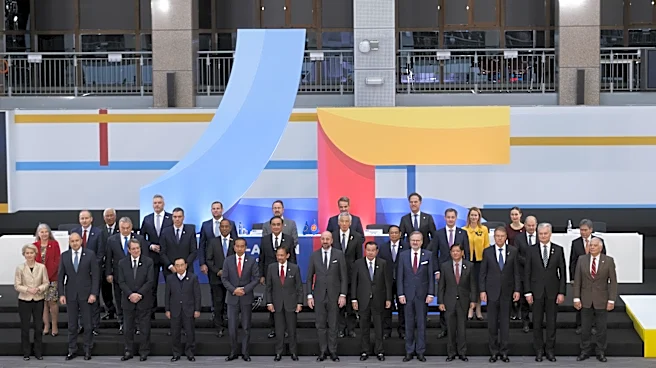
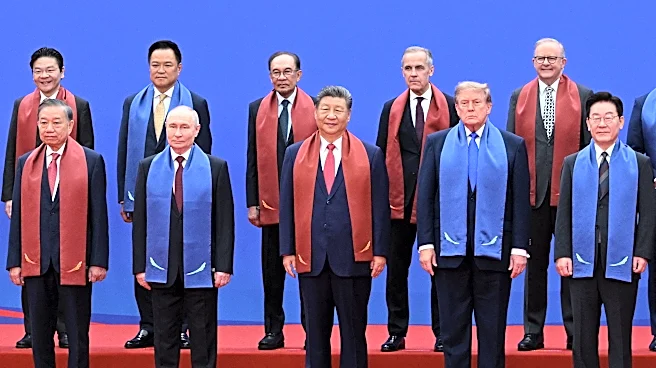
IMF Managing Director Kristalina Georgieva recently presented the global economic outlook at the 2026 APEC Economic Leaders’ Meeting in Shenzhen, China. She emphasized the significant and transformative impact of Artificial Intelligence (AI) on global growth,
noting that 2026 marks the first year AI has materially influenced the world economy. AI has provided a counterbalance to negative energy supply shocks, making it a crucial factor for medium-term competitiveness, productivity, and growth. This AI-led acceleration contributed to a global growth of 3.1 percent, with APEC experiencing 3.4 percent growth. Trade in AI hardware and related tech products now accounts for over one-tenth of world goods trade by value, a rapidly increasing share. Georgieva also addressed key policy issues, including rising inflation and interest rates, increasing global public debt, and the urgent need for structural reforms to enhance productivity and growth, particularly through AI adoption and capital market development.
Why It's Important?
The insights from IMF Managing Director Kristalina Georgieva underscore the profound shift occurring in the global economy due to AI. For the U.S., as a leader in AI development and adoption, this presents both significant opportunities and challenges. The rapid integration of AI into various sectors can boost productivity and competitiveness, potentially leading to sustained economic growth. However, the rising global inflation, projected at 4.7 percent this year due to both energy supply and AI demand shocks, necessitates careful monetary policy adjustments. Higher interest rates, driven by inflation and increased bond issuance, will impact borrowing costs for U.S. businesses and consumers. Furthermore, the global public debt nearing 100 percent of GDP highlights the need for fiscal prudence, which could influence U.S. government spending and taxation policies. The call for structural reforms to prepare labor markets and digital infrastructure for AI adoption is critical for the U.S. to maintain its economic edge and ensure equitable distribution of AI's benefits.
What's Next?
In response to the current economic landscape, many economies, including potentially the U.S., may need to consider tightening monetary policy to combat rising inflation. The upward trend in interest rates and bond yields, already at decades-high levels in many advanced economies, suggests that financial markets will continue to adjust. Governments will face increased scrutiny regarding their finances as higher interest payments contribute to growing public debt. This could lead to discussions and actions aimed at fiscal consolidation and debt management. Furthermore, there will be an accelerated focus on implementing structural reforms to facilitate AI adoption. This includes investing in digital infrastructure, preparing the workforce for AI-driven changes through education and training, and developing risk mitigation strategies, particularly concerning financial stability and cybersecurity. International cooperation, as highlighted by the APEC meeting, will be crucial for addressing these global economic challenges and harnessing AI's potential.
Beyond the Headlines
The rapid technological transformation driven by AI, as described by IMF Managing Director Kristalina Georgieva, carries deeper implications beyond immediate economic indicators. The unprecedented speed of AI's impact creates an urgent need for policymakers to adapt, emphasizing that countries that delay in preparing for AI risk falling behind. This 'you snooze, you lose' scenario highlights a potential widening of the economic gap between nations that embrace AI and those that do not. Ethically, the widespread adoption of AI raises questions about job displacement, the future of work, and the need for robust social safety nets. Legally, new frameworks may be required to govern AI's development and deployment, addressing issues such as data privacy, algorithmic bias, and intellectual property. Culturally, societies will need to adapt to a world increasingly shaped by intelligent machines, influencing education, social interactions, and even human identity. The emphasis on digital infrastructure, AI-ready labor markets, and risk mitigation underscores a long-term shift towards a technology-centric global economy.