


What's Happening?
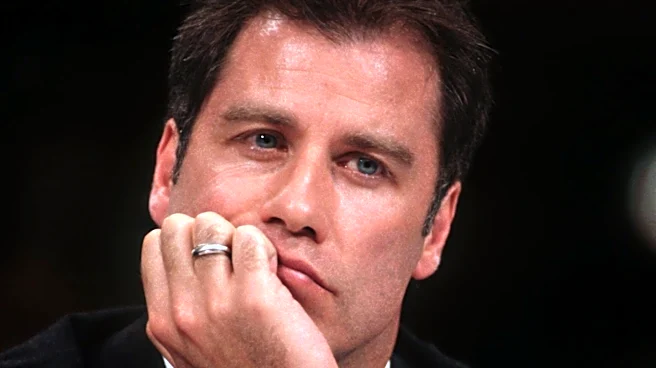
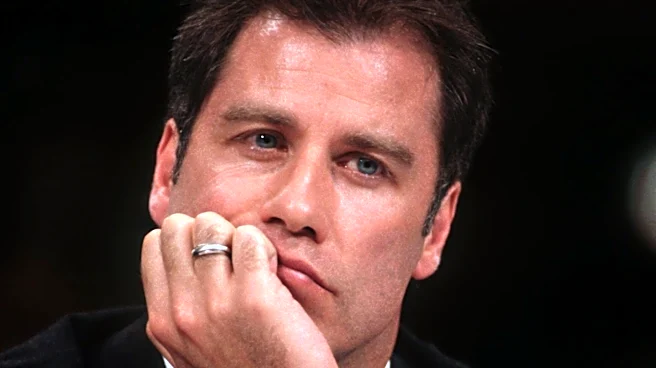
Actor John Travolta has taken on the role of real-life mobster John 'Handsome Johnny' Roselli in the new film 'November 1963.' Travolta described the experience of portraying the character as entering 'a very dark state of mind,' indicating it was not
a 'fun' role to inhabit. The movie delves into the theory that Chicago mobsters orchestrated the assassination of President John F. Kennedy due to alleged broken political promises. Roselli was a figure associated with the Chicago Outfit, known for his influence in Hollywood and Las Vegas, and was reportedly recruited by the CIA for plots to assassinate Cuban leader Fidel Castro. His body was found in an oil drum in 1976, and his murder remains unsolved. The film also stars Robert Carlyle as Lee Harvey Oswald and Dermot Mulroney, Jefferson White, and Mandy Patinkin in other roles. Travolta expressed his belief in the film's premise, citing 'government documents' and the way the 'puzzle seems to fit' as reasons for his conviction.
Why It's Important?
This film is significant for several reasons, particularly its exploration of a long-standing conspiracy theory surrounding the assassination of President John F. Kennedy. By presenting the idea that Chicago mobsters were behind the assassination, 'November 1963' could reignite public discussion and scrutiny of historical events and official narratives. The involvement of a prominent actor like John Travolta in a role that he describes as 'dark' and impactful lends weight to the film's subject matter, potentially drawing a wider audience to consider these alternative historical interpretations. For the entertainment industry, it highlights the continued interest in historical crime dramas and the willingness of filmmakers to tackle controversial subjects. The film's premise, rooted in 'government documents' according to Travolta, also touches upon themes of government secrecy and public trust, which are perennially relevant in U.S. society.
What's Next?
The release of 'November 1963' is likely to generate considerable public and media discussion, especially given its controversial subject matter. Audiences and critics will be evaluating the film's portrayal of historical events and its interpretation of the JFK assassination. Depending on its reception, the movie could spark renewed interest in the various conspiracy theories surrounding President Kennedy's death, potentially leading to documentaries, books, or further cinematic explorations of the topic. The film's success could also influence future casting decisions for John Travolta, potentially leading him to take on more roles in historically charged or darker dramatic productions. Furthermore, the film's narrative might prompt historians and researchers to revisit or re-examine existing evidence related to the assassination, particularly any 'government documents' that support the mob involvement theory.
Beyond the Headlines
Beyond its immediate narrative, 'November 1963' touches upon deeper societal implications regarding historical truth and the power of storytelling. The film's premise, which challenges the official account of the JFK assassination, highlights the enduring fascination with unresolved historical mysteries and the public's appetite for alternative explanations. Ethically, the film raises questions about the responsibility of filmmakers when dramatizing historical events, especially those with significant national impact and ongoing debate. The portrayal of mob figures and their alleged influence on national politics also underscores the complex and often shadowy interplay between organized crime and governmental power in American history. This cinematic exploration could contribute to a broader cultural conversation about how history is constructed, interpreted, and consumed by the public, and the role of media in shaping collective memory.