






What's Happening?
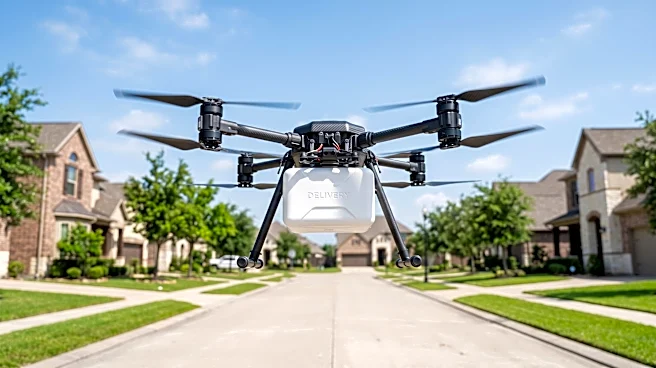
The Katy city council has officially approved a zoning change that will allow a company specializing in drone-based food delivery to establish operations within the city. This decision paves the way for a new method of food order fulfillment in Katy,
Texas. The specific company involved was not named in the report, but the approval signifies the city's embrace of emerging delivery technologies. FOX 26's Karys Belger provided details on this development, highlighting the local government's move to integrate drone services into its commercial landscape. This approval marks a significant step for the company, enabling it to begin the process of setting up its infrastructure and launching its drone delivery operations, which could transform how residents receive their food orders.
Why It's Important?
This zoning approval in Katy is significant as it represents a growing trend of municipalities adapting their regulations to accommodate advanced technological services like drone delivery. For residents of Katy, this could mean faster and potentially more efficient food delivery options, reducing reliance on traditional vehicle-based services. For businesses, particularly restaurants, it opens up new avenues for reaching customers and potentially expanding their delivery radius. The decision also signals Katy's progressive stance on technology adoption, which could attract other tech-focused businesses to the area. This move could also serve as a model for other suburban cities considering similar integrations, demonstrating how local governance can facilitate the introduction of innovative services into daily life. The success or challenges faced by this drone delivery service in Katy could influence broader adoption and regulatory frameworks across the U.S.
What's Next?
Following the zoning approval, the drone delivery company will likely proceed with establishing its operational infrastructure in Katy. This will involve setting up launch and landing sites, potentially hiring local staff, and integrating with local food establishments. Residents can anticipate the gradual rollout of the service, which will likely begin with a limited scope before expanding. The city council and local authorities will likely monitor the service's impact on local traffic, noise levels, and public safety to ensure smooth integration. Other businesses in Katy may also begin to explore partnerships with the drone delivery service, potentially leading to a wider array of products available for drone delivery beyond just food. The success of this initial phase will be crucial in determining the long-term viability and expansion of drone delivery services in the region.
Beyond the Headlines
The introduction of drone delivery services in Katy touches upon broader implications concerning urban planning, logistics, and consumer behavior. Ethically, questions may arise regarding data privacy, as drones collect flight path information and potentially visual data. Legally, the operation of drones in urban airspace necessitates clear regulations concerning flight paths, altitude restrictions, and emergency protocols, which local authorities will need to continuously refine. Culturally, the sight of drones delivering goods could become a common urban fixture, altering perceptions of convenience and immediate gratification. This development could also spur innovation in related fields, such as drone manufacturing, battery technology, and autonomous navigation systems. Long-term, widespread drone delivery could reduce road congestion and carbon emissions from traditional delivery vehicles, contributing to environmental sustainability, though the energy consumption of drone fleets would also need to be considered.