



What's Happening?
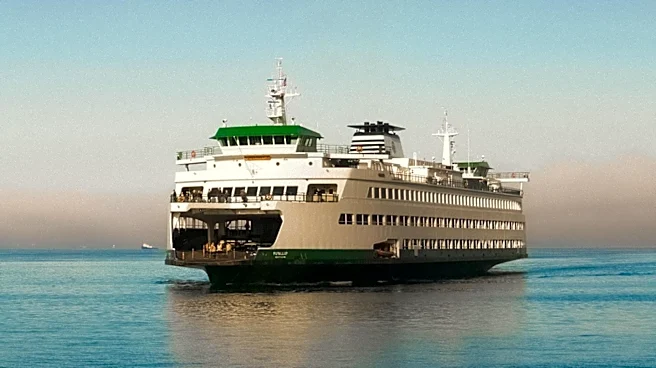
Construction has officially begun on Washington State's new hybrid-electric ferries at a shipyard in Panama City, Florida. This marks the first new ferry construction for the state in over a decade. The project involves building three hybrid-electric vessels,
with the first expected to serve the Mukilteo-Clinton route. The ferries are designed to run primarily on rechargeable battery power, with diesel generators as a backup. This initiative is part of Washington State's efforts to modernize its ferry fleet and improve service reliability, which has been challenged by aging vessels and crew shortages.
Why It's Important?
The construction of these hybrid-electric ferries represents a significant step towards sustainable transportation solutions. By reducing reliance on diesel fuel, the new ferries are expected to lower emissions and contribute to environmental conservation efforts. The project also addresses the urgent need to replace aging ferries, ensuring more reliable service for the state's residents and visitors. The decision to build the ferries in Florida, rather than locally, highlights the economic considerations involved in large-scale infrastructure projects and the importance of cost-effective solutions.
What's Next?
The first hybrid-electric ferry is scheduled for delivery in 2030, with the subsequent vessels expected in 2031 and 2032. Washington State Ferries plans to continue expanding its fleet, with a long-term goal of increasing the number of vessels to improve service reliability. The state is also exploring funding options to support further ferry construction, including potential partnerships and new financial models. The success of this project could serve as a model for other regions looking to modernize their transportation infrastructure with sustainable technologies.