
What's Happening?
Jamie Lee Curtis, a renowned American actress, received a modest salary of $8,000 for her debut film role as Laurie Strode in the 1978 horror classic 'Halloween'. At the time, Curtis was an unknown 19-year-old,
which limited her negotiating power. This initial low compensation is a notable example of actors receiving surprisingly small paychecks for roles that later become iconic. Her salary significantly increased to $100,000 for the sequel three years later, reflecting her rising prominence after the success of the first film. The original 'Halloween' played a crucial role in the commercial boom of horror movies in the late 1970s and 1980s, establishing Curtis's career in the industry.
Why It's Important?
This situation highlights the significant financial disparities that can exist in the entertainment industry, particularly for emerging talent. While 'Halloween' became a cultural phenomenon and launched Jamie Lee Curtis into a successful career, her initial compensation was minimal compared to the film's eventual impact and her subsequent earnings. This case underscores the speculative nature of early career roles for actors, where potential for future success often outweighs immediate financial gain. It also sheds light on the power dynamics in Hollywood, where established stars command higher fees, while newcomers may accept lower pay to gain a foothold. The long-term success of actors like Curtis, despite initial low pay, demonstrates the value of iconic performances in building lasting careers and negotiating power.
What's Next?
The trend of actors accepting lower pay for breakout roles is likely to continue, especially in independent films or projects with uncertain commercial success. For emerging actors, securing a role in a critically acclaimed or commercially successful film, even with a modest initial salary, can be a strategic move to establish their presence in the industry. As actors gain recognition and their projects achieve success, their negotiating power for subsequent roles typically increases, as seen with Jamie Lee Curtis's salary jump for the 'Halloween' sequel. The industry will continue to see a spectrum of compensation, with a premium placed on proven talent and established box office draws.
Beyond the Headlines
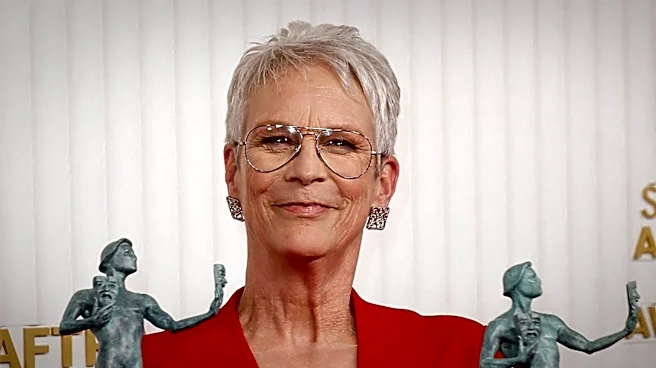
The story of Jamie Lee Curtis's initial 'Halloween' salary reflects a broader narrative within Hollywood regarding the valuation of artistic contributions versus commercial success. It raises questions about how talent is compensated at different stages of a career and the inherent risks actors take. This dynamic can influence career choices, with some actors prioritizing exposure and artistic integrity over immediate financial reward. The long-term impact of such iconic roles, even if initially underpaid, often transcends monetary value, shaping an actor's legacy and opening doors to diverse opportunities, as evidenced by Curtis's enduring career and recent Academy Award win for 'Everything Everywhere All at Once'.