






What's Happening?
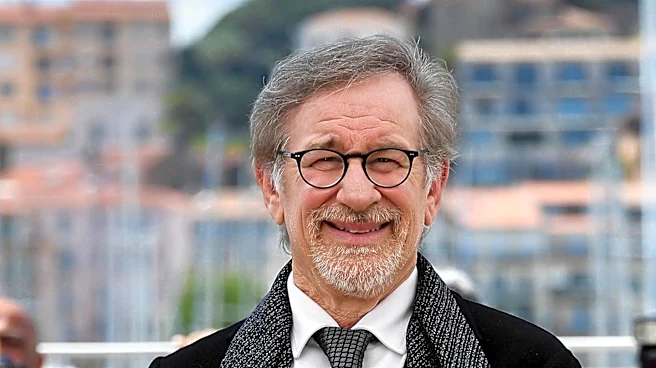
Steven Spielberg has cultivated a reputation for directing classic children's films, demonstrating a unique ability to connect with young actors. His method involves fostering a friendly and encouraging environment rather than employing strict authority.
For instance, during the filming of 'E.T. the Extra-Terrestrial,' Spielberg directed Henry Thomas and Drew Barrymore by engaging with them on their level, playing video games with Barrymore during breaks, and using casual conversations to convey emotional nuances of a scene instead of technical details. He also encouraged them to interact with the E.T. animatronic as if it were a real entity. This approach prioritizes capturing natural and spontaneous reactions from child actors, often avoiding multiple takes to preserve authenticity. Spielberg also dedicates time to psychologically prepare young actors for emotionally intense scenes, as seen with Christian Bale in 'Empire of the Sun,' where he intuitively communicated the character's internal conflict.
Why It's Important?
Spielberg's distinctive directorial style with child actors is significant because it highlights an effective methodology for eliciting authentic performances from young talent. By creating a comfortable and stimulating set environment, he minimizes the stress often associated with filming for children, which can lead to more genuine and powerful portrayals. This approach not only benefits the actors' immediate performance but also contributes to the emotional depth and relatability of his films, making them resonate deeply with audiences across generations. His emphasis on natural reactions and psychological preparation helps young actors understand and embody complex emotions, contributing to the critical and commercial success of his works. This method sets a precedent for how directors can nurture and guide child actors, potentially influencing future filmmaking practices in Hollywood and beyond.
What's Next?
Spielberg's continued influence in filmmaking suggests that his methods for working with child actors will likely remain a subject of study and emulation within the industry. Future projects involving young talent may increasingly adopt similar empathetic and communicative approaches, moving away from more rigid, authority-driven directorial styles. The success of his films, particularly those centered on children, will continue to inspire new generations of filmmakers to prioritize the well-being and natural expression of their youngest cast members. This could lead to a broader shift in industry standards for child actor welfare and performance coaching, potentially resulting in more nuanced and impactful performances from young talent in upcoming productions.
Beyond the Headlines
Beyond the immediate impact on film production, Spielberg's approach to directing children touches upon broader ethical and psychological considerations in creative industries. His method underscores the importance of child-centric practices, recognizing that young individuals require different forms of guidance and support to thrive in demanding professional environments. This extends beyond filmmaking to other fields involving child performers or participants, advocating for environments that prioritize emotional well-being and natural development over strict adherence to adult-centric production schedules or demands. It also highlights the power of empathy and understanding in fostering creativity and achieving artistic excellence, suggesting that a humane approach can yield superior results compared to more conventional, results-oriented methods.