





What's Happening?
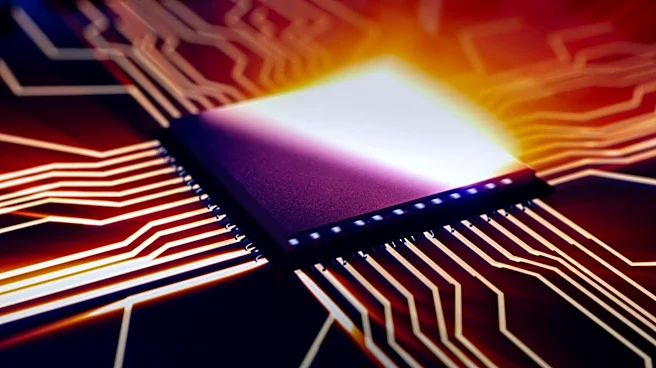
Infineon Technologies AG has introduced its new PSOC Control C3 Performance Line microcontroller (MCU) family, designed to enhance real-time control in power and motor applications. These MCUs leverage an Arm® Cortex®-M33 multi-core architecture, operating
at up to 180 MHz, to deliver high control loop frequency, precision, and system efficiency. The PSOC Control C3 family is specifically engineered for digital control applications demanding higher switching frequencies, such as AI server power supply units (PSUs), solar power systems, switched-mode power supplies (SMPS), and electric vehicle (EV) charging infrastructure, as well as high-end motor control. A key feature of these new MCUs is their compliance with Post-Quantum Cryptography (PQC) requirements for firmware protection, as outlined in the Commercial National Security Algorithm (CNSA) Suite 2.0. They also support Platform Security Architecture (PSA) Level 3 enablement, addressing the growing need for increased security in industrial applications, particularly in the context of the post-quantum cryptography era. Steve Tateosian, SVP and General Manager, IoT, Consumer and Industrial MCUs at Infineon Technologies, emphasized that this family provides the necessary performance, flexibility, security, and scalability without increasing the physical footprint.
Why It's Important?
The launch of Infineon's PSOC Control C3 Performance Line MCUs is significant for U.S. industries heavily reliant on advanced power conversion and motor control, including data centers, telecommunications, renewable energy (solar), and the rapidly expanding EV charging sector. The enhanced performance, particularly the ability to handle higher switching frequencies and improve control loop accuracy, can lead to more efficient and reliable systems. This translates to potential energy savings and improved operational stability for critical infrastructure. The integration of Post-Quantum Cryptography (PQC) compliance is a forward-looking security measure that will be crucial for protecting sensitive industrial applications against future quantum computing threats. As the U.S. government and various industries prepare for the PQC era, Infineon's offering provides a vital component for securing digital control systems. This development supports the broader trend of digitalization and decarbonization by enabling more sophisticated and secure control over power systems and IoT devices, which are foundational to modern industrial and consumer technologies.
What's Next?
Samples of the PSOC Control C3 Performance Line MCUs, which are compliant with Post-Quantum Cryptography, are currently available. Infineon offers dedicated parts for power conversion (PSC3P8/PSC3P7) and motor control (PSC3M8/PSC3M7) in various package options with up to 100 pins. The company also provides the ModusToolbox Power Suite and Motor Suite, a comprehensive design environment that includes control libraries and tools to facilitate quicker time-to-market for developers. The CNSA 2.0-compatible MCU family incorporates SHA-512 and LMS firmware verification for secure boot and firmware update processes. This availability means that U.S. manufacturers and developers can begin integrating these advanced MCUs into their next-generation products and systems, accelerating the adoption of more secure and efficient digital control solutions across various sectors. The ongoing transition from analog to digital control in power conversion and motor control applications will likely see increased demand for such high-performance, secure, and scalable MCU solutions.
Beyond the Headlines
The introduction of PQC-compliant MCUs by Infineon highlights a critical, albeit often overlooked, aspect of cybersecurity: the looming threat of quantum computing. While quantum computers are still in their nascent stages, their potential to break current cryptographic standards necessitates proactive measures. By embedding PQC capabilities into their new MCUs, Infineon is addressing a long-term security challenge that could have profound implications for national infrastructure and data security. This move also underscores the increasing convergence of hardware and software security, where robust cryptographic protections are integrated directly into the silicon. Furthermore, the focus on high-performance digital control for applications like AI server PSUs and EV charging points to the foundational role of semiconductors in supporting emerging technologies and sustainable initiatives. The ethical implications of robust security in critical infrastructure, particularly against state-sponsored cyber threats, are also brought to the forefront, as these MCUs could become integral to protecting essential services and sensitive data in the U.S. and globally.