
What's Happening?
The creative industries are undergoing a significant transformation due to advancements in AI tools for film, music, images, and 3D modeling. Companies like Runway, Luma, and Google are releasing advanced video generation models with improved speed and audio
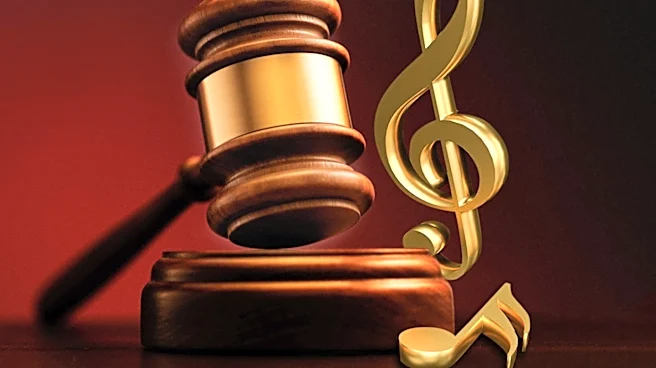
integration. In animation, tools such as Runway’s Act-Two and Hedra’s Character-3 are enabling the transfer of human performances to generated characters. Image generation platforms like Midjourney and OpenAI’s ChatGPT Images 2.0 offer enhanced capabilities for mood, texture, and reasoning. The music industry is seeing AI models from Suno and Udio, with some labels opting for licensing agreements rather than litigation. Even audio mastering and synthetic voice technologies from companies like ElevenLabs are becoming more sophisticated. Hollywood studios are increasingly integrating AI for tasks like de-aging actors, refining dialogue, and generating visual effects, often without public disclosure. The legal framework surrounding AI-generated content is still developing, with ongoing copyright lawsuits and new regulations like the EU AI Act requiring transparency.
Why It's Important?
The widespread adoption of AI tools in creative fields has profound implications for U.S. industries, particularly entertainment and media. These tools can significantly reduce production times and costs, potentially democratizing content creation by making sophisticated techniques accessible to individual creators. However, this also raises critical questions about job displacement for traditional artists, animators, and musicians. The evolving legal landscape around copyright and consent is crucial; ongoing lawsuits, such as Disney and Universal’s suit against Midjourney, will set precedents for intellectual property ownership in the age of AI. Licensing agreements between AI developers and music labels indicate a shift towards collaboration, but also highlight the need for clear compensation models for original content creators whose work trains these AI systems. The ethical considerations of using AI to replicate voices and appearances, as well as the requirement for human authorship in awards like the Oscars, underscore a growing debate about authenticity and creative control.
What's Next?
The rapid evolution of AI tools suggests continued advancements in their capabilities, with a focus on speed, realism, and integration across different creative mediums. We can anticipate further legal battles and legislative efforts to define copyright, authorship, and consent in the context of AI-generated content, potentially leading to new industry standards and regulations. More licensing agreements between AI companies and content owners are likely to emerge as a way to navigate intellectual property concerns. The entertainment industry will likely continue to explore and integrate AI more deeply into production pipelines, potentially leading to new forms of storytelling and visual experiences. However, there will also be ongoing discussions and potential pushback from creative communities regarding the ethical use of AI, fair compensation, and the preservation of human artistry. The development of AI models that can generate longer, more complex, and more coherent outputs will be a key area of focus for developers.
Beyond the Headlines
Beyond the immediate practical applications, the rise of creative AI tools prompts deeper philosophical and ethical considerations about the nature of art and human creativity. As AI becomes more capable of generating compelling content, the definition of 'authorship' and the value of human input are being re-evaluated. The ability to seamlessly de-age or alter performances raises questions about authenticity and the manipulation of reality in media, potentially blurring the lines between what is real and what is AI-generated. This could lead to increased scrutiny from audiences and a demand for greater transparency regarding AI's role in content creation. Furthermore, the concentration of powerful AI tools in the hands of a few companies could lead to new forms of creative monopolies, impacting diversity and independent artistic expression. The long-term societal impact on cultural narratives and the perception of human achievement in the arts remains an open question.