







What's Happening?
National Association of Home Builders (NAHB) CEO Jim Tobin stated on Fox Business' 'Varney & Co.' that high mortgage rates are 'eating up all the good news' in the housing market. Tobin acknowledged that while the administration has achieved some regulatory
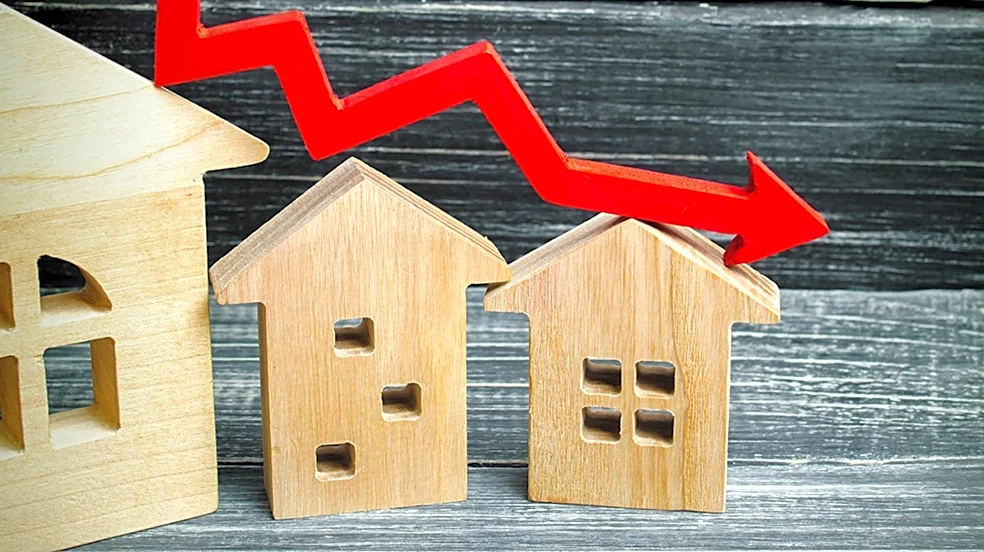
and legislative victories, these positive developments are overshadowed by rising interest rates. He noted that NAHB predicts a decline in single-family home building, with a 4% drop this year and a 3% drop next year, attributing this directly to mortgage rates hovering around 7.5%. Tobin also highlighted a growing disparity in the market, where luxury home builders are performing adequately, but those serving the middle class are struggling. He emphasized the need to reduce regulatory burdens to lower housing costs for the lower-end tier of the market. Despite these challenges, Tobin firmly asserted that the American Dream of homeownership is 'absolutely not dead,' though it may be delayed for some.
Why It's Important?
Jim Tobin's remarks underscore a critical challenge facing the U.S. housing market: the significant impact of high mortgage rates on affordability and construction activity. This situation directly affects potential homebuyers, particularly those in the middle and lower-income brackets, by reducing their purchasing power and making homeownership less attainable. For the construction industry, the projected decline in single-family home building signals a slowdown that could lead to job losses and reduced economic activity in related sectors. The widening gap between the luxury and entry-level housing markets suggests an increasing inequality in housing access, potentially exacerbating social and economic disparities. Policymakers face pressure to address these issues, as a healthy housing market is often seen as a cornerstone of economic stability and individual wealth building. The call to reduce regulatory burdens indicates a potential area for policy intervention aimed at stimulating supply and lowering costs, which could benefit a broad segment of the population.
What's Next?
The U.S. housing market is expected to continue grappling with the effects of high mortgage rates, which NAHB CEO Jim Tobin indicates will persist in dampening single-family home construction. Stakeholders, including home builders, real estate agents, and potential buyers, will likely monitor interest rate trends closely, as any significant reduction could alleviate some of the current pressures. Industry groups like the NAHB will likely continue advocating for policy changes aimed at reducing regulatory burdens and construction costs, which could include lobbying efforts at both federal and state levels. The divergence between luxury and entry-level housing markets may persist, leading to continued challenges for first-time homebuyers and those with limited financial resources. Economic indicators related to housing starts, existing home sales, and mortgage applications will provide ongoing insights into the market's health and potential shifts. The Federal Reserve's future decisions on interest rates will be a critical factor influencing the trajectory of the housing market in the coming months.
Beyond the Headlines
The current state of the U.S. housing market, as described by NAHB CEO Jim Tobin, reveals deeper societal and economic implications. The increasing unaffordability of homes, driven by high mortgage rates and regulatory burdens, threatens the traditional pathway to wealth accumulation for many American families. This could lead to a generational shift where homeownership becomes an increasingly distant goal for younger demographics, potentially widening the wealth gap and altering long-term economic stability. The emphasis on reducing regulatory burdens also highlights an ongoing debate about the balance between necessary consumer protections, environmental considerations, and the need for affordable housing supply. Furthermore, the struggle of middle-class home builders could lead to a consolidation in the construction industry, favoring larger firms capable of navigating higher costs and complex regulations. This situation could also impact local economies, as housing development is a significant driver of employment and local tax revenue, potentially leading to broader economic slowdowns in communities heavily reliant on new construction.