





What's Happening?
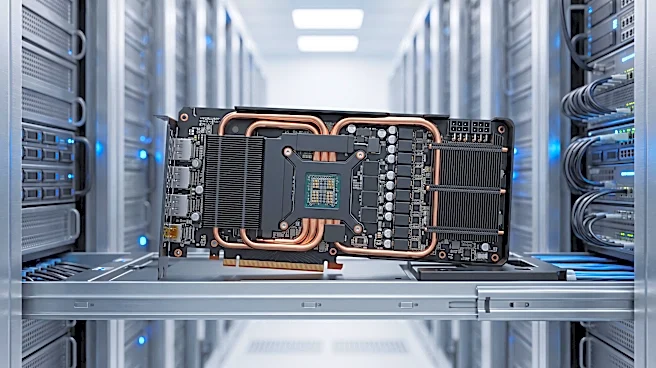
Bryan Catanzaro, Vice President of Applied Deep Learning Research at NVIDIA, has observed that the cost of computational resources for his teams now surpasses the expenditure on employees. This statement comes as the tech industry grapples with the escalating
economic realities of integrating artificial intelligence, particularly the transition from simple chatbots to more complex AI agents. Companies like Microsoft and Uber have reportedly faced significant budget overruns due to the unexpected costs associated with AI usage. Microsoft, for instance, began scaling back licenses for high-end AI coding tools like Claude Code in late 2025 and early 2026 due to astronomical bills. Similarly, Uber's Chief Technology Officer revealed in April 2026 that the company had exhausted its entire 2026 AI budget within just four months, driven by a surge in AI tool usage among engineers. The shift to AI agents, which perform goal-oriented tasks involving multiple steps, significantly increases token consumption and, consequently, costs, with failures being particularly expensive.
Why It's Important?
The rising cost of AI compute, as highlighted by NVIDIA's VP, signals a critical economic challenge for U.S. industries heavily investing in AI. This trend could force a re-evaluation of AI integration strategies, potentially slowing down the widespread adoption of advanced AI agents if the return on investment does not justify the expenditure. Companies that initially viewed AI as a primary cost-cutting tool are now confronting the reality that AI can be more expensive than human labor, especially when considering the computational resources required for complex tasks and the costs associated with AI agent failures. This economic friction could lead to a shift in focus from full AI replacement to more hybrid models where humans remain integral to the workflow, acting as 'Verification Specialists' to prevent costly AI runaway processes. The development also underscores the growing importance of hardware efficiency, as companies like Microsoft attempt to design their own chips to mitigate these rising costs, though increased AI workload complexity often negates such savings.
What's Next?
In response to the escalating costs, the tech industry is likely to see a continued emphasis on optimizing AI workloads and developing more cost-efficient AI models. There may be a renewed focus on the 'human in the loop' approach, where human oversight becomes an economic necessity rather than just a safety feature, leading to the creation of new roles like Verification Specialists. Companies might also explore more strategic and controlled deployment of AI tools, moving away from unchecked usage that led to budget crises at firms like Uber. Hardware manufacturers, including NVIDIA and Intel, will likely intensify their competition to develop more powerful and energy-efficient chips capable of handling increasingly complex AI demands at a lower operational cost. Furthermore, the industry may witness a greater push for open-source AI development to foster innovation and potentially reduce proprietary costs, as suggested by NVIDIA's support for open development in AI.
Beyond the Headlines
The economic realities of AI integration, as articulated by NVIDIA's VP, point to a deeper re-evaluation of the long-term vision for artificial intelligence. The initial narrative of AI as a universal cost-cutter and human worker replacement is being challenged by the tangible expenses of compute power and the inefficiencies of current AI agent performance. This could lead to a more nuanced understanding of AI's role, positioning it as an augmentation tool rather than a wholesale substitute for human intelligence. The shift also raises ethical considerations regarding the environmental impact of increased computational demands, as the underlying costs of electricity and chips are non-negotiable. Furthermore, the drive for hardware efficiency and proprietary AI ecosystems, such as NVIDIA's CUDA, could lead to increased vendor lock-in and potential monopolization of AI infrastructure, impacting the broader accessibility and democratic development of AI technologies.