


What's Happening?
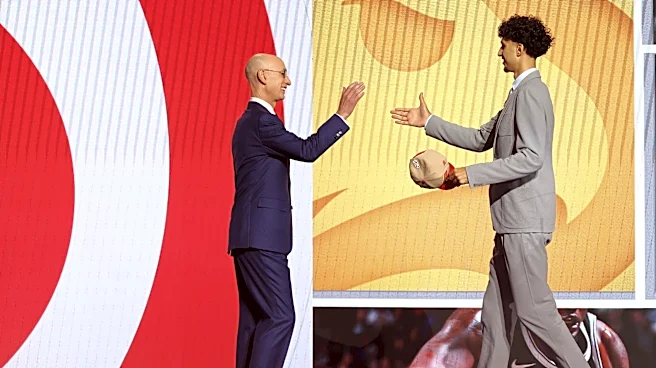
Washington Governor Bob Ferguson held a virtual meeting with NBA Commissioner Adam Silver to discuss the potential expansion of the league to Seattle. This discussion comes amidst reports that Seattle's return as an NBA city is not a guaranteed outcome,
despite strong local interest. Governor Ferguson's office confirmed his continued dedication to bringing professional basketball back to Washington, emphasizing his lifelong fandom for the Seattle SuperSonics. Multiple parties are reportedly considering bids for a new franchise, with one proposal suggesting Climate Pledge Arena as the venue and another envisioning a new stadium on the Tulalip reservation. The NBA has indicated that a decision on overall league expansion, potentially including Seattle and Las Vegas, could be made by the end of the year, with a target season of 2028-29 for expansion.
Why It's Important?
The potential return of the SuperSonics holds significant cultural and economic importance for Seattle and Washington state. The team's departure in 2008 left a void for many fans, and its return would represent a major win for the community. Economically, an NBA franchise would bring new jobs, increased tourism, and revenue streams through ticket sales, merchandise, and local spending. However, the financial aspects are complex, with existing team owners prioritizing financial returns. The cost for a Seattle franchise could exceed $6 billion, and the issue of arena ownership, particularly with One Roof Sports and Entertainment controlling Climate Pledge Arena, could pose challenges for other potential ownership groups seeking to maximize their investment. The outcome of these discussions will impact not only the sports landscape but also local business and civic pride.
What's Next?
NBA Commissioner Adam Silver has stated that a decision on league expansion could occur within the year. While Seattle has a credible bidding group led by One Roof Sports and Entertainment, which includes investors like Melinda French Gates and Amazon CEO Andy Jassy, the lack of multiple bidders in Seattle compared to Las Vegas has raised concerns. The financial viability and the ability of Seattle's bid to generate significant short-term and long-term revenue will be crucial factors for existing NBA owners. Governor Ferguson and his office will likely continue their dialogue with Commissioner Silver and other stakeholders to advocate for Seattle's case. The community remains cautiously optimistic, with many hoping for the return of the SuperSonics, which would be seen as a significant achievement for the league's leadership.
Beyond the Headlines
The pursuit of an NBA team for Seattle transcends mere sports; it touches upon civic identity and the emotional connection between a city and its professional sports franchises. The SuperSonics' departure left a lasting impact, and their potential return symbolizes a healing of that historical wound. The discussions also highlight the intricate interplay between state leadership, private enterprise, and professional sports leagues in major economic decisions. The debate over arena ownership and the financial models for new franchises underscore the evolving business landscape of professional sports, where control over venues and associated revenue streams is increasingly critical. This situation could set precedents for how future league expansions are negotiated, particularly in markets with existing world-class facilities but complex ownership structures.