





What's Happening?
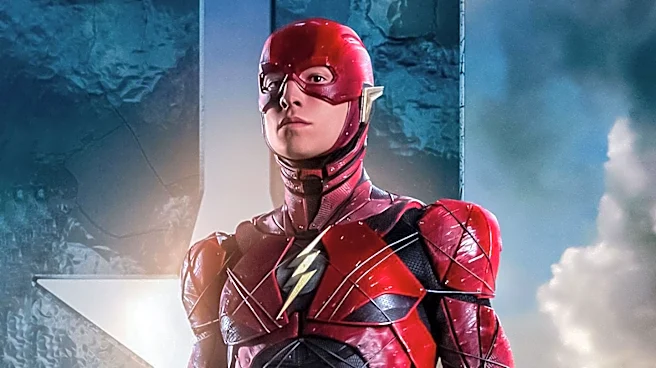
During a recent fan encounter in Venice, actor Ezra Miller was asked about the possibility of a sequel to their 2023 film, 'The Flash.' Miller's response was a brief and humorous, 'God only knows,' followed by a laugh, without further elaboration. This
interaction comes after 'The Flash' received mixed reviews from critics and the public, and significantly underperformed at the global box office. The film's commercial struggles, combined with Miller's past public controversies, have led to speculation that a continuation of the movie with Miller in the lead role is unlikely. The original source indicates that a new actor might eventually take on the role of The Flash, but the character could be absent from screens for an extended period. Theories among fans suggest that a future cinematic appearance might introduce Wally West instead of Barry Allen, though this remains speculative. Currently, 'The Flash' is available on HBO Max.
Why It's Important?
Ezra Miller's non-committal response regarding a 'Flash' sequel highlights the significant challenges faced by Warner Bros. and DC Studios in planning future cinematic endeavors for the character. The film's poor box office performance, coupled with the actor's well-documented legal and personal controversies, creates a complex situation for the studio. This scenario could influence how major studios approach casting and franchise development, particularly when lead actors face public scrutiny. The potential recasting of The Flash or a prolonged absence of the character from the DC Universe could impact fan engagement and the overall trajectory of the DC Extended Universe. It also underscores the increasing pressure on studios to manage both creative and public relations aspects of their major film franchises, especially in an era where actor conduct can heavily influence a project's success and public perception. The decision to potentially introduce a different iteration of The Flash, such as Wally West, could signal a strategic shift in how DC Studios plans to reboot or reintroduce iconic characters to audiences.
What's Next?
Given the current circumstances, a direct sequel to 'The Flash' starring Ezra Miller appears improbable. DC Studios will likely need to make strategic decisions regarding the future of the Flash character within its cinematic universe. This could involve a complete recasting of Barry Allen, or a more significant reboot that introduces a different version of The Flash, such as Wally West, as speculated by fans. The studio may also opt to keep the character off-screen for an extended period to allow for a fresh start and to distance the franchise from past controversies. Any future announcements from DC Studios regarding The Flash will be closely watched by fans and industry observers, as they will provide insight into the studio's long-term plans for its superhero properties and its approach to managing talent relations and franchise continuity. The performance of other upcoming DC films may also influence the timeline and nature of any future Flash-related projects.
Beyond the Headlines
The situation surrounding Ezra Miller and 'The Flash' extends beyond typical box office and casting decisions, touching upon broader industry trends concerning accountability and brand management in Hollywood. The public controversies involving a lead actor can significantly impact a film's commercial viability and the studio's reputation, prompting a reevaluation of how talent is vetted and supported. This case highlights the delicate balance between artistic freedom and corporate responsibility, especially when dealing with high-profile intellectual properties. Furthermore, the discussion around potentially introducing a new iteration of The Flash, like Wally West, reflects a growing trend in superhero narratives to explore multiversal concepts and alternate versions of characters. This approach allows studios to refresh franchises, address past issues, and cater to diverse fan bases, while also navigating the complexities of continuity and audience expectations in an evolving cinematic landscape. The long-term implications could shape future casting decisions and franchise strategies across the entertainment industry.