





What's Happening?
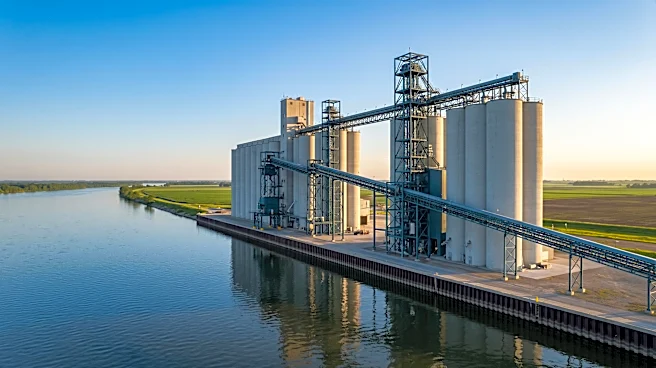
Growmark, Inc. has announced its acquisition of full ownership of Imperial Valley Terminal, a significant grain terminal situated along the Illinois River in Havana, Illinois. This facility, previously known as CHS Havana, was jointly owned by Growmark and
CHS for several years. The acquisition is a strategic move by Growmark to enhance its grain handling and transportation capabilities across the region. Following the acquisition, Lakeside Grain Trading LLC, a wholly owned subsidiary of Growmark, will manage the terminal's grain operations. Concurrently, Sunrise FS, another Growmark subsidiary, will continue to oversee the facility's agronomy and energy-related assets, ensuring a seamless transition and integrated management. The Imperial Valley Terminal is crucial for the agricultural supply chain, serving as a key delivery point for farmers and commercial grain companies, facilitating efficient grain movement to export markets, and supporting the import of essential crop nutrients. Its strategic location on the Illinois River provides significant transportation advantages, connecting agricultural products to both domestic and international buyers.
Why It's Important?
This acquisition is important for several reasons, primarily strengthening Growmark's position in the agricultural sector and enhancing the efficiency of grain movement in the Midwest. By gaining full ownership, Growmark aims to streamline operations and improve overall efficiency at the terminal. The company also plans to expand the high-volume facility to meet increasing customer demand and provide improved services for growers and grain marketers. This move is expected to bolster logistics capabilities and support future growth opportunities, creating additional value for Growmark's member-owners and expanding opportunities for customers throughout the region. The investment in agricultural infrastructure, particularly in transportation and storage facilities, is critical for farmers seeking reliable market access and competitive grain marketing opportunities. This consolidation allows for better control over the supply chain, potentially leading to more stable and efficient grain distribution, which benefits both producers and consumers by ensuring timely delivery and competitive pricing.
What's Next?
With full ownership of Imperial Valley Terminal, Growmark is poised to further develop the facility and strengthen its customer relationships. The company plans to expand the terminal's capacity and services to meet growing demand, which will likely involve investments in infrastructure and technology. Lakeside Grain Trading will be the direct contact for customers seeking grain merchandising, transportation, or logistics services, indicating a focused approach to managing these operations. This strategic move is expected to support the long-term growth of regional agriculture by improving access to export and supply chain opportunities. The enhanced operational control and streamlined management under Growmark's subsidiaries, Lakeside Grain Trading and Sunrise FS, suggest a more integrated and efficient system for grain handling and distribution in the Midwest. This could lead to increased market competitiveness for farmers and more robust agricultural trade in the region.
Beyond the Headlines
The acquisition of Imperial Valley Terminal by Growmark signifies a broader trend of consolidation and vertical integration within the agricultural industry. This move allows Growmark to exert greater control over a critical part of the grain supply chain, from storage to transportation, which can have significant implications for market dynamics. By strengthening its grain network, Growmark can potentially influence pricing, logistics, and market access for farmers in the Midwest. This could lead to increased efficiency and potentially lower costs for some, but it also raises questions about market concentration and competition. The emphasis on investing in agricultural infrastructure highlights the ongoing need to modernize and expand facilities to meet the demands of a growing global population and evolving trade patterns. Furthermore, the strategic location along the Illinois River underscores the enduring importance of waterways for agricultural commerce, connecting inland production to international markets and reinforcing the role of efficient transportation in the global food system.