







What's Happening?
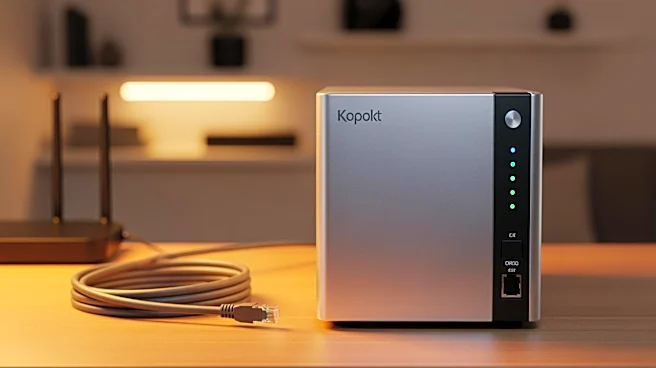
Network-attached storage (NAS) devices are gaining popularity as versatile solutions for home networks, offering capabilities such as file backup, media streaming, and enhanced data management. Recent testing of various NAS devices highlights their utility
in creating personal entertainment clouds and reducing reliance on external streaming services. The Synology DiskStation DS225+ is noted for its speed and user-friendly setup, making it a top choice for home users. It features a robust Intel Celeron processor, expandable RAM, and a range of connectivity options, although it lacks an HDMI port for direct TV connections. Synology's software is praised for its polished interface and extensive app support, including third-party options like Plex. Despite their benefits, NAS devices require an upfront investment and ongoing costs, but they offer privacy and control over personal data, which is a significant advantage over cloud services.
Why It's Important?
The increasing adoption of NAS devices reflects a shift towards greater data privacy and control in personal computing environments. As more individuals seek to manage their digital lives independently, NAS devices provide a viable alternative to cloud storage, which often involves recurring fees and potential privacy concerns. By enabling users to host their own media servers and backup systems, NAS devices can reduce dependency on external services, potentially leading to cost savings over time. This trend also highlights a growing demand for user-friendly technology that empowers individuals to manage their data securely and efficiently. The ability to customize and expand storage solutions as needed further enhances the appeal of NAS devices, making them a strategic investment for tech-savvy consumers.
What's Next?
As the market for NAS devices continues to grow, manufacturers are likely to focus on enhancing user experience and expanding functionality. Future developments may include improved integration with smart home systems, increased compatibility with third-party applications, and advancements in data security features. Additionally, as more consumers become aware of the benefits of NAS devices, there may be a push for more affordable options to cater to a broader audience. The ongoing evolution of NAS technology will likely drive innovation in home networking solutions, offering users even more control over their digital environments.