


What's Happening?
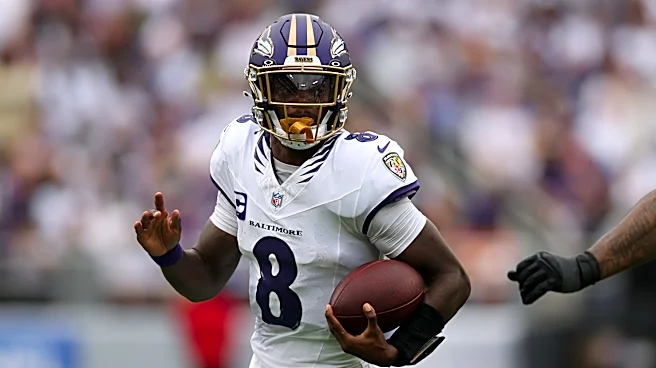
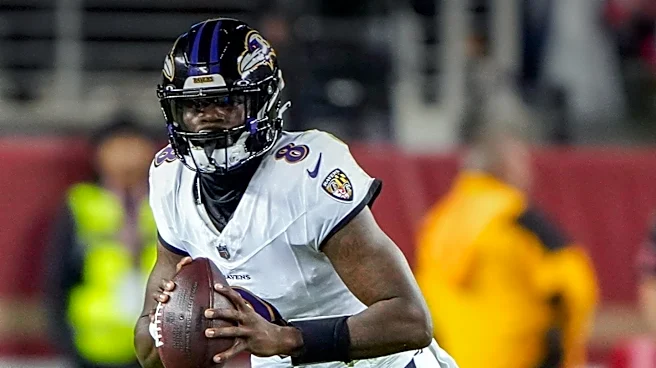
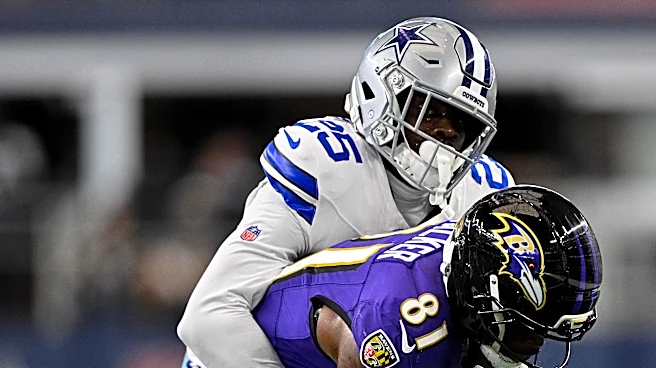
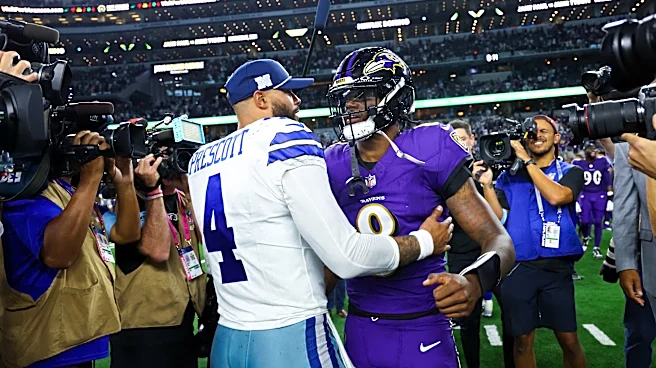
Baltimore Ravens quarterback Lamar Jackson has playfully challenged the Dallas Cowboys' long-standing title of 'America's Team' in anticipation of their upcoming game in Brazil. When asked about the Cowboys potentially bringing a large fan presence to
the international game, Jackson quipped, 'Yeah, but that's America, that's Brazil, so we'll see.' Despite the lighthearted jab, Jackson also acknowledged the strength of the Cowboys' pass rush, noting their ability to disrupt the pass game. The Week 3 matchup between the Ravens and the Cowboys will be the NFL's first-ever game held in Rio de Janeiro, Brazil, at the Maracanã Stadium. The Cowboys are scheduled to fly from Dallas/Fort Worth International Airport to Rio de Janeiro–Galeão International Airport on Thursday night after their final practice.
Why It's Important?
This interaction highlights the growing internationalization of the NFL and the strategic efforts by the league to expand its global footprint. By hosting games in new territories like Brazil, the NFL aims to cultivate new fan bases and increase its worldwide revenue streams. For the Dallas Cowboys, maintaining their 'America's Team' brand is crucial for marketing and fan engagement, both domestically and internationally. Lamar Jackson's comments, while humorous, also underscore the competitive spirit and the narrative-building that often precedes high-profile NFL games. The success of this inaugural game in Brazil could pave the way for more regular international fixtures, influencing future scheduling and team travel logistics across the league. The game also presents a significant opportunity for both teams to showcase their talent on a global stage, potentially impacting player endorsements and team valuations.
What's Next?
The immediate next step is the highly anticipated game itself in Rio de Janeiro. The performance of both the Baltimore Ravens and the Dallas Cowboys in this historic international matchup will be closely watched, not only by fans but also by NFL executives evaluating the success of their global expansion initiatives. Following the game, there will likely be assessments of fan turnout, broadcast viewership, and overall logistical execution in Brazil. The NFL will use this data to inform decisions about future international games, including potential new host cities and the frequency of such events. For the teams, the focus will shift back to their regular season schedules, with the outcome of this game potentially influencing their standings and playoff aspirations. The 'America's Team' debate, fueled by Jackson's comments, may also continue to be a talking point among sports analysts and fans.
Beyond the Headlines
Beyond the immediate sporting event, this game in Brazil represents a broader cultural exchange and a test of the NFL's ability to translate its American appeal to diverse international audiences. The concept of 'America's Team' itself, deeply rooted in U.S. sports culture, faces a unique challenge when presented on foreign soil. The game could spark discussions about how American sports brands adapt their identities and marketing strategies for global consumption. Furthermore, the logistical complexities of transporting two NFL teams, their staff, and equipment across continents for a single game highlight the significant investment and planning required for such international ventures. The success or failure of this event could influence not only the NFL's future international strategy but also serve as a case study for other major American sports leagues looking to expand their global reach.