







What's Happening?
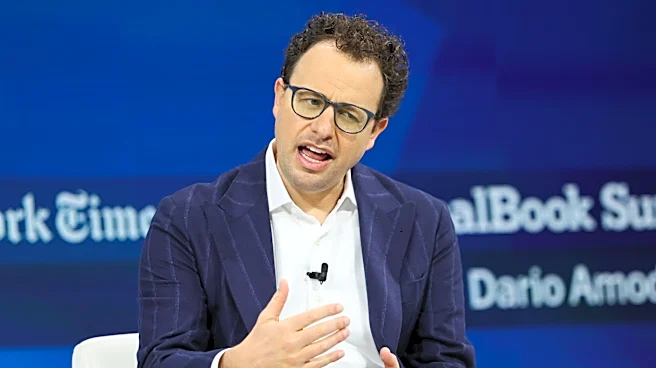
A New York Times profile has delved into the background of Dario Amodei, co-founder of the artificial intelligence company Anthropic, ahead of its anticipated IPO. The extensive feature, based on interviews with over 20 individuals connected to Amodei, traces
his life from a San Francisco upbringing to his current leadership role in a major AI firm. Key revelations include the death of his father from hepatitis C before a cure became widely available, his own battle with testicular cancer at age 31, and his departure from OpenAI with his team in late 2020 to establish Anthropic. The profile emphasizes Amodei's foundational belief system, rooted in utilitarianism, which involves quantifying the consequences of choices to maximize positive outcomes. This philosophical approach has shaped his conviction that AI development must be guided by individuals with the right ethical framework. Amodei, who declined to be interviewed for the article, has been described as a proponent of AI safety, a stance that has drawn both support and criticism within the tech community.
Why It's Important?
The detailed examination of Dario Amodei's past is significant as Anthropic prepares for its IPO, positioning him as a central figure in the rapidly evolving AI industry. His utilitarian philosophy and personal experiences, such as his father's death and his own cancer diagnosis, are presented as formative influences on his approach to AI development and safety. This perspective is crucial in a field where ethical considerations and potential societal impacts are under intense scrutiny. Understanding the motivations and beliefs of leaders like Amodei can provide insight into the strategic direction and ethical commitments of major AI companies. The narrative also highlights the growing debate within the AI community regarding safety measures versus rapid advancement, with Amodei often seen as advocating for a more cautious, safety-first approach. This could influence investor confidence and public perception of Anthropic as it enters the public market.
What's Next?
As Anthropic moves towards its IPO, the public scrutiny of its leadership, particularly Dario Amodei, is likely to intensify. The detailed profile could shape investor sentiment, with those prioritizing ethical AI development potentially viewing Amodei's background favorably. Conversely, those who advocate for faster, less constrained AI progress might remain critical. The company's future strategies and product development will likely continue to reflect Amodei's core beliefs in responsible AI. The ongoing debate about AI safety, in which Amodei is a prominent voice, will also continue to evolve, potentially influencing regulatory discussions and industry standards. Anthropic's performance post-IPO will be closely watched as a bellwether for AI companies that emphasize safety and ethical considerations as core tenets of their business model.
Beyond the Headlines
The narrative surrounding Dario Amodei extends beyond typical business profiles, touching upon deeper philosophical and ethical dimensions of technological advancement. His early embrace of utilitarianism and later immersion in rationalism and effective altruism subcultures underscore a methodical, almost mathematical, approach to life's big questions, including the impact of AI. This intellectual foundation suggests that Anthropic's long-term vision may be driven by more than just market share or profit; it could be deeply intertwined with a mission to ensure AI benefits humanity in a quantifiable way. The tension between his personal experiences, such as the 'time gap' in his father's treatment, and his professional pursuit of broad-impact tools, highlights a profound commitment to leveraging technology for societal good. This blend of personal conviction and professional ambition could set a precedent for how future AI leaders are perceived and how their companies are expected to operate in an increasingly complex technological landscape.